Routledge Classics

King Solomon’s Ring
84,00 ₾Solomon, the legend goes, had a magic ring which enabled him to speak to the animals in their own language. Konrad Lorenz was gifted with a similar power of understanding the animal world. He was that rare beast, a brilliant scientist who could write (and indeed draw) beautifully. He did more than any other person to establish and popularize the study of how animals behave, receiving a Nobel Prize for his work. King Solomon’s Ring, the book which brought him worldwide recognition, is a delightful treasury of observations and insights into the lives of all sorts of creatures, from jackdaws and water-shrews to dogs, cats and even wolves. Charmingly illustrated by Lorenz himself, this book is a wonderfully written introduction to the world of our furred and feathered friends, a world which often provides an uncanny resemblance to our own. A must for any animal-lover!
The Origin and Goal of History
74,00 ₾Karl Jaspers (1883–1969) was a German psychiatrist and philosopher and one of the most original European thinkers of the twentieth century. As a major exponent of existentialism in Germany, he had a strong influence on modern theology, psychiatry and philosophy. He was Hannah Arendt’s supervisor before her emigration to the United States in the 1930s and himself experienced the consequences of Nazi persecution. He was removed from his position at the University of Heidelberg in 1937, due to his wife being Jewish.
Published in 1949, the year in which the Federal Republic of Germany was founded, The Origin and Goal of History is a vitally important book. It is renowned for Jaspers’ theory of an ‘Axial Age’, running from the 8th to the 3rd century BCE. Jaspers argues that this period witnessed a remarkable flowering of new ways of thinking that appeared in Persia, India, China and the Greco-Roman world, in striking parallel development but without any obvious direct cultural contact between them. Jaspers identifies key thinkers from this age, including Confucius, Buddha, Zarathustra, Homer and Plato, who had a profound influence on the trajectory of future philosophies and religions. For Jaspers, crucially, it is here that we see the flowering of diverse philosophical beliefs such as scepticism, materialism, sophism, nihilism, and debates about good and evil, which taken together demonstrate human beings’ shared ability to engage with universal, humanistic questions as opposed to those mired in nationality or authoritarianism.
At a deeper level, The Origin and Goal of History provides a crucial philosophical framework for the liberal renewal of German intellectual life after 1945, and indeed of European intellectual life more widely, as a shattered continent attempted to find answers to what had happened in the preceding years.
This Routledge Classics edition includes a new Foreword by Christopher Thornhill.
Words and Things
65,00 ₾When Ernest Gellner was his early thirties, he took it upon himself to challenge the prevailing philosophical orthodoxy of the day, Linguistic Philosophy. Finding a powerful ally in Bertrand Russell, who provided the foreword for this book, Gellner embarked on the project that was to put him on the intellectual map.
The first determined attempt to state the premises and operational rules of the movement, Words and Things remains philosophy’s most devastating attack on a conventional wisdom to this day.
Relativity
60,00 ₾Time’s ‘Man of the Century’, Albert Einstein is the unquestioned founder of modern physics. His theory of relativity is the most important scientific idea of the modern era. In this short book Einstein explains, using the minimum of mathematical terms, the basic ideas and principles of the theory which has shaped the world we live in today. Unsurpassed by any subsequent books on relativity, this remains the most popular and useful exposition of Einstein’s immense contribution to human knowledge.
The Special Theory of Relativity
66,00 ₾In these inspiring lectures David Bohm explores Albert Einstein’s celebrated Theory of Relativity that transformed forever the way we think about time and space. Yet for Bohm the implications of the theory were far more revolutionary both in scope and impact even than this. Stepping back from dense theoretical and scientific detail in this eye-opening work, Bohm describes how the notion of relativity strikes at the heart of our very conception of the universe, regardless of whether we are physicists or philosophers.

Science, Order and Creativity
66,00 ₾One of the foremost scientists and thinkers of our time, David Bohm worked alongside Oppenheimer and Einstein. In Science, Order and Creativity he and physicist F. David Peat propose a return to greater creativity and communication in the sciences. They ask for a renewed emphasis on ideas rather than formulae, on the whole rather than fragments, and on meaning rather than mere mechanics. Tracing the history of science from Aristotle to Einstein, from the Pythagorean theorem to quantum mechanics, the authors offer intriguing new insights into how scientific theories come into being, how to eliminate blocks to creativity and how science can lead to a deeper understanding of society, the human condition and the human mind itself. Science, Order and Creativity looks to the future of science with elegance, hope and enthusiasm.

A Life of One’s Own
66,00 ₾This is what I really want. I want to discover ways to discriminate the important things in human life. I want to find ways of getting past this blind fumbling with existence.’ – Marion Milner, from A Life of One’s Own.
How often do we really ask ourselves, ‘What will make me happy? What do I really want from life?’ In A Life of One’s Own Marion Milner, a renowned British psychoanalyst, artist and autobiographer, takes us on an extraordinary and compelling seven-year inward journey to discover what it is that makes her happy.
On its first publication, W. H. Auden found the book ‘as exciting as a detective story’ and, as Milner searches out clues, the reader quickly becomes involved in the chase. Using her own personal diaries, she analyses moments of everyday life that can bring surprising joy, such as walking, listening to music, and drawing. She also records, in a disarmingly clear and insightful manner, the struggle between the urge to order and control one’s thoughts and standing back to let them wander where they may.
A pioneering account of lived experience that also anticipates the contemporary phenomenon of mindfulness, A Life of One’s Own is a great adventure in thinking and living whose insights remain as fresh today as they were on the book’s first publication in the 1930s.
This Routledge Classics edition includes a revised Introduction by Rachel Bowlby.

Sanity, Madness and the Family
66,00 ₾In the late 1950s the psychiatrist R.D.Laing and psychoanalyst Aaron Esterson spent five years interviewing eleven families of female patients diagnosed as ‘schizophrenic’. Sanity, Madness and the Family is the result of their work. Eleven vivid case studies, often dramatic and disturbing, reveal patterns of affection and fear, manipulation and indifference within the family. But it was the conclusions they drew from their research that caused such controversy: they suggest that some forms of mental disorder are only comprehensible within their social and family contexts; their symptoms the manifestations of people struggling to live in untenable situations.
Sanity, Madness and the Family was met with widespread hostility by the psychiatric profession on its first publication, where the prevailing view was to treat psychosis as a medical problem to be solved. Yet it has done a great deal to draw attention to the complex and contested nature of psychosis. Above all, Laing and Esterson thought that if you understood the patient’s world their apparent madness would become socially intelligible.
This Routledge Classics edition includes a new Foreword by Hilary Mantel.

Psychological Types
90,00 ₾Psychological Types is one of Jung’s most important and famous works. First published in English by Routledge in the early 1920s it appeared after Jung’s so-called fallow period, during which he published little, and it is perhaps the first significant book to appear after his own confrontation with the unconscious. It is the book that introduced the world to the terms ‘extravert’ and ‘introvert’. Though very much associated with the unconscious, in Psychological Types Jung shows himself to be a supreme theorist of the conscious. In putting forward his system of psychological types Jung provides a means for understanding ourselves and the world around us: our different patterns of behaviour, our relationships, marriage, national and international conflict, organizational functioning.
This Routledge Classics edition includes a new foreword by John Beebe.

Aspects of the Feminine
56,00 ₾Love is a force of destiny whose power reaches from heaven to hell.’ So Jung advises while reflecting on ‘The Love Problem of a Student’, an essay contained in this volume. But it is not just love that Jung speaks of in this book. Taking as its theme Jung’s interpretation of the feminine principle in his hugely influential theories about the inner world of the individual, it guides the reader from the mythological archetype of the mother-figure to the experience of women in twentieth-century Europe, explaining along the way concepts crucial to Jung’s understanding of the personality, such as animus and anima. Many of his contentions have become the assumptions of the generations growing up in the twenty-first century. Aspects of the Feminine is a provocative, controversial book which offers readers the opportunity to discover at first hand just how radical Jung’s arguments were.

Analytical Psychology
88,00 ₾In 1935 Jung gave a now famous and controversial course of five lectures at the Tavistock Clinic in London. In them he presents, in lucid and compelling fashion, his theory of the mind and the methods he had used to arrive at his conclusions: dream analysis, word association and ‘active imagination.’ Immediately accessible to the general reader, the Tavistock lectures are a superb introduction to anyone coming to Jung’s psychology for the first time and crucial for understanding analytical psychology.
A fascinating feature of the book is the inclusion of some of the questions posed to Jung at the end of each lecture. These questions, including those from leading psychoanalysts such as Wilfrid Bion, and the discussions that follow offer an outstanding example of a great thinker at the peak of their powers. Also amongst the audience was Samuel Beckett, who was deeply affected by what Jung had to say.
With a new foreword by Kevin Lu
Vision and Difference
65,00 ₾Griselda Pollock provides concrete historical analyses of key moments in the formation of modern culture to reveal the sexual politics at the heart of modernist art. Crucially, she not only explores a feminist re-reading of the works of canonical male Impressionist and Pre-Raphaelite artists including Edgar Degas and Dante Gabriel Rossetti, but also re-inserts into art history their female contemporaries – women artists such as Berthe Morisot and Mary Cassatt.
Pollock discusses the work of women artists such as Mary Kelly and Yve Lomax, highlighting the problems of working in a culture where the feminine is still defined as the object of the male gaze. Now published with a new introduction, Vision and Difference is as powerful as ever for all those seeking not only to understand the history of the feminine in art, but also to develop new strategies for representation for the future.
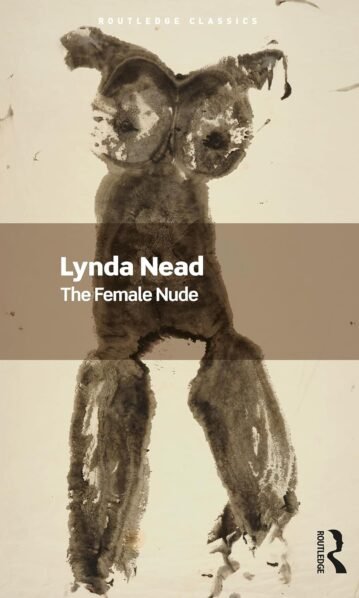
The Female Nude
75,00 ₾The history of Western art is saturated with images of the female body. Lynda Nead’s The Female Nude was the first book to critically examine this phenomenon from a feminist perspective and ask: how and why did the female nude acquire this status?
In a deft and engaging manner, Lynda Nead explores the ways in which acceptable and unacceptable images of the female body are produced, issues which have been reignited by current controversies around the patriarchy, objectification and pornography. Nead brilliantly illustrates the two opposing poles occupied by the female nude in the history of art; at one extreme the visual culmination of enlightenment aesthetics; at the other, spilling over into the degraded and the obscene. What both have in common, however, is the aim of containing the female body.
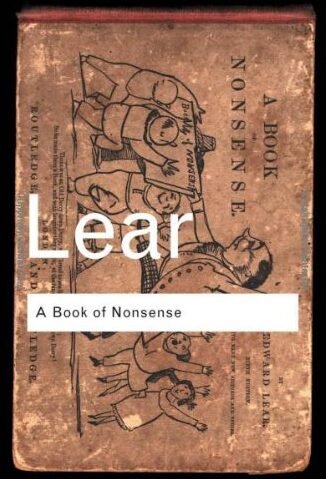
A Book of Nonsense
56,00 ₾From the benighted Old Man with a Beard to the erudite Perpendicular Purple Polly, Edward Lear’s world is inhabited by a bewildering variety of oddities. One of the world’s most loved writers, Lear’s verse has delighted whole generations of readers. Here, after 140 years, is the original edition of A Book of Nonsense, from the original publishers. Complete with Lear’s own remarkable illustrations, this treasure trove of nonsense is guaranteed to hold readers spellbound for generations more!

The Singularity of Literature
68,00 ₾The Iliad and Beowulf provide rich sources of historical information. The novels of Henry Fielding and Henry James may be instructive in the art of moral living. Some go further and argue that Emile Zola and Harriet Beecher Stowe played a part in ameliorating the lives of those existing in harsh circumstances. However, as Derek Attridge argues in this outstanding and acclaimed book, none of these capacities is distinctive of literature. What is the singularity of literature? Do the terms “literature” and “the literary” refer to actual entities found in cultures at certain times, or are they merely expressions characteristic of such cultures? Attridge argues that this resistance to definition and reduction is not a dead end, but a crucial starting point from which to explore anew the power and practices of Western art.
Derek Attridge provides a rich new vocabulary for literature, rethinking such terms as “invention,” “singularity,” “otherness,” “alterity,” “performance” and “form.” He returns literature to the realm of ethics, and argues for the ethical importance of literature, demonstrating how a new understanding of the literary might be put to work in a “responsible,” creative mode of reading.
The Singularity of Literature is not only a major contribution to the theory of literature, but also a celebration of the extraordinary pleasure of the literary, for reader, writer, student or critic.
This Routledge Classics edition includes a new preface by the author.

The Use and Abuse of History
68,00 ₾Use and Abuse of History has become a key text of current historiography; this is a book that poses fundamental and disturbing questions about the use and abuse of history. Engaging and challenging, this book confronts the reader with the many ‘histories’ that exist and have existed around the world, from the Zulu kingdoms to Communist China.
This title has now been extensively revised by Marc Ferro, a well respected historian, and presents the different narratives that constitute the histories of countries as diverse as India, Iran, Trinidad and the United States makes for fascinating reading in their own right. What makes this book so valuable, though, is what these narratives tell us about the societies which create them – how much is history distorted in order to condition the minds of those who are taught it?
Use and Abuse of History appeals to anyone with a general interested in history.

The Captive Wife
66,00 ₾In 1965, at the age of twenty-nine, the young sociologist Hannah Gavron took her own life. A year later, the book based on the research she carried out for her thesis was published as The Captive Wife. Based on first-hand accounts of the lives of working-class and middle-class women in Kentish Town in London, it was one of the earliest works of British, sociological feminism and has since become a feminist classic.
Arguing that motherhood stripped women of independence as it often brought an end to paid work, Gavron explores how their values and aspirations as women came into conflict with the traditional role they had to play as mothers.
Written in simple prose and fair-minded in its approach, it became an inspirational book for many mothers, feminists and activists seeking equality for women and remains a vital book today.
This Routledge Classics edition includes a new Foreword by Ann Oakley.

The Theory of Economic Development
70,00 ₾Joseph Schumpeter (1883–1950) is one of the most fascinating and influential economists of the twentieth century, renowned for his brilliant and unorthodox insights into the nature of capitalism. His students include leading economists such as Paul Samuelson, Robert Solow and the former chairman of the Federal Reserve, Alan Greenspan.
The Theory of Economic Development is one of Schumpeter’s most important books and the one that made him famous. He poses a fundamental question: why does economic development proceed cyclically rather than evenly? Turning prevailing economic theory, which approached economics as equilibrium, on its head, Schumpeter argues it is because economics is constantly transformed by its own internal forces. These forces are the ‘circular flow’ of economic life; economic development, characterised by disruption and innovation; and finally, the levers that push and pull capitalism including credit, profit and interest. These are all manifested in the ‘business cycle’, one of Schumpeter’s major contributions to understanding economics and now a perennial feature of virtually all economics and business curricula. He is also the first economist to place the entrepreneur at the heart of capitalism, anticipating subsequent fascination with entrepreneurship in popular business and management writing. Schumpeter also lays the groundwork for his subsequent, highly influential idea of the ‘creative destruction’ characteristic of radical and rapid economic change.
The Theory of Economic Development remains a vital, magisterial account of economics and the nature of capitalism whose many insights remain highly relevant today.
This Routledge Classics edition includes a new Introduction by Richard Swedberg.
Stone Age Economics
65,00 ₾Since its first publication over forty years ago Marshall Sahlins’s Stone Age Economics has established itself as a classic of modern anthropology and arguably one of the founding works of anthropological economics. Ambitiously tackling the nature of economic life and how to study it comparatively, Sahlins radically revises traditional views of the hunter-gatherer and so-called primitive societies, revealing them to be the original “affluent society.”
Sahlins examines notions of production, distribution and exchange in early communities and examines the link between economics and cultural and social factors. A radical study of tribal economies, domestic production for livelihood, and of the submission of domestic production to the material and political demands of society at large, Stone Age Economics regards the economy as a category of culture rather than behaviour, in a class with politics and religion rather than rationality or prudence. Sahlins concludes, controversially, that the experiences of those living in subsistence economies may actually have been better, healthier and more fulfilled than the millions enjoying the affluence and luxury afforded by the economics of modern industrialisation and agriculture.
This Routledge Classics edition includes a new foreword by David Graeber, London School of Economics.
A General Theory of Magic
65,00 ₾First written by Marcel Mauss and Henri Humbert in 1902, A General Theory of Magic gained a wide new readership when republished by Mauss in 1950. As a study of magic in ‘primitive’ societies and its survival today in our thoughts and social actions, it represents what Claude Lévi-Strauss called, in an introduction to that edition, the astonishing modernity of the mind of one of the century’s greatest thinkers. The book offers a fascinating snapshot of magic throughout various cultures as well as deep sociological and religious insights still very much relevant today. At a period when art, magic and science appear to be crossing paths once again, A General Theory of Magic presents itself as a classic for our times.

Sex and Repression in Savage Society
65,00 ₾During the First World War the pioneer anthropologist Bronislaw Malinowski found himself stranded on the Trobriand Islands, off the eastern coast of New Guinea. By living among the people he studied there, speaking their language and participating in their activities, he invented what became known as ‘participant-observation’. This new type of ethnographic study was to have a huge impact on the emerging discipline of anthropology. In Sex and Repression in Savage Society Malinowski applied his experiences on the Trobriand Islands to the study of sexuality, and the attendant issues of eroticism, obscenity, incest, oppression, power and parenthood. In so doing, he both utilized and challenged the psychoanalytical methods being popularized at the time in Europe by Freud and others. The result is a unique and brilliant book that, though revolutionary when first published, has since become a standard work on the psychology of sex.
Lines
65,00 ₾What do walking, weaving, observing, storytelling, singing, drawing and writing have in common? The answer is that they all proceed along lines. In this extraordinary book Tim Ingold imagines a world in which everyone and everything consists of interwoven or interconnected lines and lays the foundations for a completely new discipline: the anthropological archaeology of the line.
Ingold’s argument leads us through the music of Ancient Greece and contemporary Japan, Siberian labyrinths and Roman roads, Chinese calligraphy and the printed alphabet, weaving a path between antiquity and the present. Drawing on a multitude of disciplines including archaeology, classical studies, art history, linguistics, psychology, musicology, philosophy and many others, and including more than seventy illustrations, this book takes us on an exhilarating intellectual journey that will change the way we look at the world and how we go about in it.
This Routledge Classics edition includes a new preface by the author.

The World of Goods
68,00 ₾It is well-understood that the consumption of goods plays an important, symbolic role in the way human beings communicate, create identity, and establish relationships. What is less well-known is that the pattern of their flow shapes society in fundamental ways. In this book the renowned anthropologist Mary Douglas and economist Baron Isherwood overturn arguments about consumption that rely on received economic and psychological explanations. They ask new questions about why people save, why they spend, what they buy, and why they sometimes-but not always-make fine distinctions about quality.
Instead of regarding consumption as a private means of satisfying one’s preferences, they show how goods are a vital information system, used by human beings to fulfill their intentions towards one another. They also consider the implications of the social role of goods for a new vision for social policy, arguing that poverty is caused as much by the erosion of local communities and networks as it is by lack of possessions, and contrast small-scale with large-scale consumption in the household.
A radical rethinking of consumerism, inequality and social capital, The World of Goods is a classic of economic anthropology whose insights remain compelling and urgent.
This Routledge Classics edition includes a new foreword by Richard Wilk.
“Forget that commodities are good for eating, clothing, and shelter; forget their usefulness and try instead the idea that commodities are good for thinking.” – Mary Douglas and Baron Isherwood

Purity and Danger
68,00 ₾Is cleanliness next to godliness? What does such a concept really mean? Why does it recur as a universal theme across all societies? And what are the implications for the unclean?
In Purity and Danger Mary Douglas identifies the concern for purity as a key theme at the heart of every society. In lively and lucid prose she explains its relevance for every reader by revealing its wide-ranging impact on our attitudes to society, values, cosmology and knowledge. This book has been hugely influential in many areas of debate – from religion to social theory. With a specially commissioned preface by the author which assesses the continuing significance of the work, this Routledge Classics edition will ensure that Purity and Danger continues to challenge, question and inspire for many years to come.