

ინგლისური

Bosch
58,00 ₾Hieronymus Bosch’s meticulous visions of the grotesque, debauched, and divine
As cryptic as they are compelling, the masterpieces of Hieronymus Bosch (c. 1450–1516) remain some of the most enduring enigmas of the art world. Their intricate, allegorical, and often startling content has captivated not only art historians, but also fashion designers, rock stars, writers, and punk rockers, as well as countless modern and contemporary artist successors.
Although rooted in the Old Netherlandish tradition, Bosch developed a highly subjective, richly suggestive style to render both the celestial bliss of heaven and the grotesque tortures of hell, most famously and meticulously excecuted in The Garden of Earthly Delights. Here, as in his other known works, his artistic language combined religious humility with a razor-sharp wit, often playing off pictorial versions of contemporary proverbs or figures of speech.
This book ties together the elusive threads of Bosch’s oeuvre to provide a concise introduction to an at once haunting and enthralling pictorial world.

Turner
58,00 ₾Turner’s iridescent tableaux
In the work of Joseph Mallord William Turner (1775–1851) lies an impact akin to a sudden acquisition of sight. His landscapes and seascapes scorch the eye with such ravishing light and color, with such elemental force, it is as if the sun itself were gleaming out of the frame.
Appropriately known as “the painter of light,” Turner worked in print, watercolor, and oils to transform landscape from serene contemplative scenes to pictures pulsating with life. He anchored his work to the River Thames and to the sea, but in the historical context of the Industrial Revolution, also integrated boats, trains, and other markers of human activity, which juxtaposes the thrust of civilization against the forces of nature.
This book covers Turner’s illustrious, wide-ranging repertoire to introduce an artist who combined a traditional genre with a radical modernism.

Le Corbusier
58,00 ₾The man with a modern mission
Born Charles-Édouard Jeanneret, Le Corbusier (1887–1965) is widely acclaimed as the most influential architect of the 20th century. From private villas to mass social housing projects, his radical ideas, designs, and writings presented a whole-scale reinvention not only of individual structures, but of entire concepts of modern living.
Le Corbusier’s work made distinct developments over the years, from early vernacular houses in Switzerland through dazzling white, purist villas to dynamic syntheses of art and architecture such as the chapel at Ronchamp and the civic buildings in Chandigarh, India. A hallmark throughout was his ability to combine functionalist aspirations with a strong sense of expressionism, as well as a broader and empathetic understanding of urban planning. He was a founding member of the Congrès international d’architecture moderne (CIAM), which championed “architecture as a social art.”
This book presents some of Le Corbusier’s landmark projects to introduce an architect, thinker, and modern pioneer who, even in his unrealized projects, offered discussion and inspiration for generations to come.

Rubens
58,00 ₾Meet Sir Peter Paul Rubens, master painter and polymath
There are over 1,000 catalogued works by Sir Peter Paul Rubens (1577–1640), the 16th-century flag bearer for Baroque drama, movement, and sensuality. This essential introduction takes in the most important works from this astonishingly prolific oeuvre to explore Rubens’s influences and innovations, and his remarkable visual, and art historical, impact.
The richly illustrated survey takes in Rubens’s portraits, landscapes, and historical paintings, as well as his famed and bountiful nudes. Along the way, we examine the artist’s astonishing technique and his deft ability to depict narrative in a compelling and legible visual form, whether an erotic mythological scene or a tender biblical story. This remarkable artistic bravura is placed in context both within Rubens’s long art historical legacy through Van Dyck, Velázquez, and beyond, and his other talents as a classical scholar, diplomat, and knight.

Schiele
58,00 ₾Radical and all-revealing figures
With his graphic style, figural distortion, and defiance of conventional standards of beauty, Egon Schiele (1890–1918) was a pioneer of Austrian Expressionism and one of the most startling portrait painters of the 20th century.
Mentored by Gustav Klimt, Schiele dabbled in a glittering Art Nouveau style before developing his own much more gritty and confrontational aesthetic of sharp lines, lurid shades, and mannered, elongated figures. His prolific portraits and self-portraits stunned the Viennese establishment with an unprecedented psychological and sexual intensity, favoring erotic, exposing, or unsettling poses in which he or his sitters cower on the floor, languish with legs akimbo, glower at the viewer, and thrust their genitalia into the foreground. His models are at times skeletal and sickly, at other times strong and sensual.
Many contemporaries found Schiele’s work to be not only ugly but morally objectionable; in 1912, the artist was briefly imprisoned for obscenity. Today, his oeuvre is celebrated for its revolutionary approach to the human figure and for its direct and particularly fervent, almost furious brand of draftsmanship. This book presents key Schiele works to introduce his short but urgent career and his profound contribution to the development of modern art, which reaches right through to such contemporary talents as Tracey Emin and Jenny Saville.

Hundertwasser
58,00 ₾Friedensreich Hundertwasser, hero of fluid forms and ecology
Vivid color, organic forms, and a loathing of straight lines were just a few stalwart characteristics in the unique practice of Friedensreich Hundertwasser (1928–2000). A non-conformist hero, the artist, architect, and activist left a blazing trail of imagination and ideas in buildings, paintings, manifestos, initiatives, and more.
Hundertwasser’s best-known work is considered by many to be the Hundertwasserhaus in Vienna, a structural synthesis of the vitality and uniqueness that determined the artist’s entire oeuvre. For Hundertwasser, rational, sterile, monotonous buildings caused human misery. He called for a boycott of the modernist paradigm championed by the likes of Adolf Loos, and campaigned instead for an architecture of creative freedom and ecological commitment. A fierce opponent of straight lines, which he called “godless and immoral,” Hundertwasser was fascinated by the spiral, drawing also on the Secessionist forms of Klimt and Schiele.
This richly illustrated book traces Hundertwasser’s style and vision not only for each building, but for society at large. From naked addresses at the end of the 1960s to worldwide architecture projects and alternative blueprints for society, author Pierre Restany explores Hundertwasser’s most high-profile and innovative ideas in a thrilling introduction to a pioneering 20th-century mind.

Futurism
58,00 ₾The action men of modernism
With motion and machines as its most treasured tropes, Futurism was founded in 1909 by Filippo Tommaso Marinetti, along with painters Giacomo Balla, Umberto Boccioni, Carlo Carrà, and Gino Severini. With affiliate painters, sculptors, designers, architects, and writers, the group sought to subsume the dusty establishment into a new age of sleek, strong, purified modernity.
Futurism’s place in art history is as ambivalent as it is important. The movement pioneered revolutionary methods to convey movement, light, and speed, but sparks controversy in its glorification of war and fascist politics. Their frenzied, almost furious, canvases, are as remarkable for their macho aggression as they are for their radical experimentation with brushstrokes, texture, and color in the quest to record an object moving through space.
With key examples from the Futurists’ prolific output and leading practitioners, this book introduces the movement that spat vitriol at all -isms of the past and, in so doing, created an -ism of their own.

Dürer
58,00 ₾The art, theory, and woodcut print revolution of Albrecht Dürer
A polymath of the German Renaissance, Albrecht Dürer (1471–1528) was a prolific artist, theorist, and writer whose works explored everything from religion to art theory to philosophy. His vast body of work includes altarpieces, portraits, self-portraits, watercolors, and books, but is most celebrated for its astonishing collection of woodcut prints, which transformed printmaking from an artisan practice into a whole new art form.
Dürer’s woodcuts astonish in scale as much as detail. Through works such as Apocalypse and the Triumphal Arch for Emperor Maximilian I, he created dense, meticulous compositions that were much larger, much more finely cut, and far more complex than any earlier woodcut efforts. With an ambitious tonal and dynamic range, he introduced a new level of conceptual, emotional, and spiritual intensity. His two major woodcut series on Christ’s Passion, named The Large Passion and The Small Passion after their size, are particularly remarkable for their vivid human treatment of the Christian narrative. In his copper engraving, Melancholia I, meanwhile, Dürer created a startling vision of emotional ennui, often cited as a defining early image of a depressive or melancholic state.
Ever inquisitive, Dürer absorbed ideas not only from masters and fellow artists in Germany but also from Italy, while his own influence extended across Europe for generations to come. In this essential TASCHEN introduction, we explore this pioneering figure’s complex practice, his omnivorous intellect, and the key works which shaped his enduring legacy.

Caravaggio
58,00 ₾The Baroque genius who electrified art history
Michelangelo Merisi da Caravaggio (1571–1610) was always a name to be reckoned with. Notorious bad boy of the Italian Baroque, the artist was at once celebrated and controversial, violent in temper, precise in technique, a creative master, and a man on the run.
Though famed for his dramatic use of color, light, and shadow, it was above all Caravaggio’s boundary-breaking naturalism which scorched his name into the annals of art history. From the dirtied soles of feet to the sexualized languor of bare flesh, the artist allowed even sacred and biblical scenes to unfold with a startling, often visceral humanity. This vivid pictorial world was accompanied by an equally intense personal biography, scored by gambling, debts, drunken brawls, and even a murder charge.
This book brings together more than 50 of Caravaggio’s most famous and revolutionary works to explore how and why this artist is now considered the most important painter of the early Baroque period and one of the defining influences of art history, without whom Ribera, Vermeer, Rembrandt, Delacroix, Courbet, and Manet could never have painted the way they did.

Cubism
58,00 ₾Deconstructing perspective with Picasso and peers
Pioneered by Picasso and Braque, Cubism has been described as the first avant-garde art movement of the 20th century. With inspiration from African and Native American art and sculpture, its practitioners deconstructed European conventions of viewpoint, form, perspective to create flattened, fragmented, and revolutionary images.
Picasso’s celebrated painting Les Demoiselles d’Avignon is typically regarded as the original cubist work, with its radical fracturing of objects and figures into distinct areas, corresponding to multiple different viewpoints. Cubism thereafter developed two distinct trends: Analytical Cubism, which continued to interweave perspectival planes in muted blacks, greys and ochre, and later Synthetic Cubism, characterised by simpler shapes, brighter colors, and collage elements such as newspaper.
This book presents the prime protagonists of Cubism, with work from artists including Pablo Picasso, Georges Braque, Fernand Léger, Juan Gris, Albert Gleizes, and Robert Delaunay.

Rothko
58,00 ₾Tragedy, ecstasy, and doom
Resisting interpretation or classification, Mark Rothko (1903–1970) was a prominent advocate for the artist’s consummate freedom of expression. Although identified as a key protagonist of the Abstract Expressionist movement, first formed in New York City, Rothko rejected the label and insisted instead on “a consummated experience between picture and onlooker.”
Following a repertoire of figurative works, Rothko developed his now iconic canvases of bold color blocks in red, yellow, ochre, maroon, black, or green. With these shimmering, pulsating color masses, Rothko stressed that he had not removed the human figure but rather put symbols or shapes in its place. These intense color forms contained all the tragedy of the human condition. At the same time, Rothko explicitly empowered the viewer in the expressive potential of his work. He believed “A picture lives by companionship, expanding and quickening in the eyes of the sensitive observer.”
From his early development through to his most famous color fields, this book introduces the intellect and influence of Rothko’s dramatic, intimate, and revolutionary work.

Rivera
58,00 ₾A revolutionary spirit in modern art
Diego Rivera (1886–1957) is a loud presence on the art historical stage. With devout political principles and a turbulent romantic history, he was at once husband and paladin of Frida Kahlo, advocate and adversary of Stalin’s Soviet Union, and liberator and traitor of Leon Trotsky.
Vibrant, graphic, and often monumental, Rivera’s paintings carry the same live political and passionate charge as his personal biography. Fusing European influences such as Cubism with a socialist ideology and an exaltation of Mexico’s indigenous and popular heritage, he created a new iconography for art history and for his country. He became one of the most important figures in the Mexican mural movement and won international acclaim for his public wall paintings, in which he presented a utopian yet accessible vision of a post-revolutionary Mexico. In 1931, Rivera was the subject of MoMA’s second ever monographic exhibition.
This book explores the unique blend of influence and ideology which secure Rivera’s place as both a unique and a universal painter, bound to the particular turbulent experience of early 20th century Mexico, and yet preoccupied with subjects such as revolution and class inequity which continue to speak to us today.

Michelangelo
58,00 ₾Michelangelo, in pursuit of the beautiful and sublime
Italian-born Michelangelo di Lodovico Buonarroti Simoni (1475–1564) was a tormented, prodigiously talented, and God-fearing Renaissance man. His manifold achievements in painting, sculpture, architecture, poetry, and engineering combined body, spirit, and God into visionary masterpieces that changed art history forever. Famed biographer Giorgio Vasari considered him the pinnacle of Renaissance achievement. His peers called him simply “Il Divino” (“the divine one”).
This book provides the essential introduction to Michelangelo with all the awe-inspiring masterpieces and none of the queues and crowds. With vivid illustration and accessible texts, we explore the artist’s extraordinary figuration and celebrated style of terribilità (momentous grandeur), which allowed human and biblical drama to exist in compelling scale and fervor. Through the power hubs of Renaissance Italy, we take in his major commissions and phenomenal capacity for compositional schemes, whether the famous Medici library in Florence, or the extraordinary 500-square-meter ceiling (1508–1512) in the Vatican’s Sistine Chapel.
From the towering David to the aching grief and faith of The Pietà and the vivid drama of the Sistine Chapel’s Last Judgment, this is a succinct, dependable reference to a true giant of art history and to some of the most famous artworks in the world.

McCurry Animals
58,00 ₾Steve McCurry photographs the animal kingdom
In Animals, we discover a different side to the famed photographer who skillfully explores animals’ complex relationship with humans and the environment.
Tenderness abounds, particularly in scenes of unkempt street dogs sleeping contentedly next to a human. But there’s also a kind of essential solitude, with animals belonging to no one and simply wandering through life with only their survival instincts to guide them. We witness camels caught in the crossfire during the first Gulf War; a shepherd from Northern Pakistan tenderly feeding his goats; Beverly Hills designer dogs; race horses on a Hong Kong rooftop; an elephant in Thailand, and more images selected by McCurry from his vast archives.
Through McCurry’s lens, we discover an appreciation for each creature’s beauty and silent dignity. This kaleidoscopic collection is at once a beautiful travelogue and a touching tribute to the creatures who share our planet.

Piano
58,00 ₾The exploration and iconoclasm of an Italian master
While some architects have a signature style, Renzo Piano seeks to apply coherent ideas to extraordinarily different projects. His buildings impress as much for their individual impact as for their diversity of scale, material, and form.
Piano rose to international prominence with his codesign of the Pompidou Center in Paris, described by The New York Times as a building that “turned the architecture world upside down.” Since then, he has continued to craft many high-profile cultural spaces, including the Modern Wing of the Art Institute of Chicago; the Morgan Library Renovation and Expansion in New York; and, most recently, the Whitney Museum of American Art, an asymmetric nine-story structure in Manhattan’s Meatpacking District with both indoor and outdoor galleries. In New York and London, the Renzo touch has also transformed the skyline with the towers of the New York Times Building and the Shard, the tallest building in the European Union.
This essential introduction travels from Osaka, Japan, to Bern, Switzerland, and through many cities, structures, and islands in between, to explore the staggering scope of the Renzo Piano repertoire. From the “inside-out” Pompidou to the airy shells of the Tjibaou Cultural Center in Nouméa, New Caledonia, this is a thrilling journey through the beauty of architecture, where, in Piano’s own words, “each time, it is like life starting all over again.”

Interiors Now!
110,00 ₾A tour of contemporary home decor around the world
With an inspirational richness and diversity of styles, these homes, residences, hideaways, and studios will astound and astonish, no matter the taste; be it rustic country cottage, New York–style loft, or bohemian bungalow. This survey of contemporary interior design carefully curates homes from all over the world—from Auckland, New Zealand, to Avignon, France.
Mapped out through hundreds of images by renowned interior photographers, these gorgeous houses offer inspiration and ideas for your next renovation. Many of the selected homes are owned by creatives—designers, filmmakers, and collectors—whose eye for the perfect synthesis of interior elements is impressive, to say the least. Bringing together wallpaper, furniture, textiles, and objet d’art while cautiously balancing color, texture, and form, the creators of these dynamic spaces practice an art form of their own.
Eclectic or minimal, antique or extra-modern, this variety of decor locates contemporary style in all its manifestations, showcasing the endless possibilities and home-making magic of interior design.

Motorcycles
110,00 ₾50 of the most legendary and coveted motorcycles of all time
Dream Rides: The most spectacular bikes on the planet. From the 1894 Hildebrand & Wolfmüller to the 2020 Aston Martin AMB 001, this book lavishly explores 50 of the most desirable motorcycles to have ever sped thrillingly around a circuit or along an open road. From pioneering record-breakers, luxury tourers, and legendary roadracers to GP-winning machines, iconic superbikes, and exotic customs, this book celebrates motorcycle design and engineering at its highest level. Many examples are from acclaimed private collections and very rarely seen. Others are the all-out stars of renowned motorcycle museums—such as the 1938 Brough Superior “Golden Dream” or the 1957 MV Agusta 500 4C, which took John Surtees to World Championship glory. Alongside some early survivors in astonishingly original condition is a stable of fabled racers—the actual machines that were competed on by the likes of Tarquinio Provini, Mike Hailwood, Giacomo Agostini, and Barry Sheene.
The fascinating stories behind these fabulous motorbikes are expertly recounted in detail, alongside stunning imagery specially taken for the book by the world’s leading motorcycle photographers. Also included are rare archival gems, from early posters to remarkable action shots.
A cornucopia of motorcycle treasures and an absolute must-have for all bike enthusiasts!

Basquiat
110,00 ₾The legend of Jean-Michel Basquiat is as strong as ever. Synonymous with 1980s New York, the artist first appeared in the late 1970s under the tag SAMO, spraying caustic comments and fragmented poems on the walls of the city. He appeared as part of a thriving underground scene of visual arts and graffiti, hip hop, post-punk, and DIY filmmaking, which met in a booming art world. As a painter with a strong personal voice, Basquiat soon broke into the established milieu, exhibiting in galleries around the world.
Basquiat’s expressive style was based on raw figures and integrated words and phrases. His work is inspired by a pantheon of luminaries from jazz, boxing, and basketball, with references to arcane history and the politics of street life—so when asked about his subject matter, Basquiat answered “royalty, heroism and the streets.” In 1983 he started collaborating with the most famous of art stars, Andy Warhol, and in 1985 was on the cover of The New York Times Magazine. When Basquiat died at the age of 27, he had become one of the most successful artists of his time.
First published in an XXL edition, this unprecedented insight into Basquiat’s art is now available in a compact, accessible volume in celebration of TASCHEN’s 40th anniversary. With pristine reproductions of his most seminal paintings, drawings, and notebook sketches, it offers vivid proximity to Basquiat’s intricate marks and scribbled words, further illuminated by an introduction to the artist from editor Hans Werner Holzwarth, as well as an essay on his themes and artistic development from curator and art historian Eleanor Nairne. Richly illustrated year-by-year chapter breaks follow the artist’s life and quote from his own statements and contemporary reviews to provide both personal background and historical context.

The History of Graphic Design
110,00 ₾Through the turbulent passage of time, graphic design—with its vivid, neat synthesis of image and idea—has distilled the spirit of each age. Surrounding us every minute of every day, from minimalist packaging to colorful adverts, smart environmental graphics to sleek interfaces: graphic design is as much about transmitting information as it is about reflecting society’s cultural aspirations and values.
With his sweeping knowledge of the field, author Jens Müller curates the standout designs for each year, a running sequence of design milestones. This collection of important graphic works represents a long-overdue reflection on the development of a creative field constantly changing and challenging itself. These key pieces act as coordinates through contemporary history, helping us trace the sheer influence of graphic design on our daily lives.


ქართველი ერის ჩამოყალიბება
20,00 ₾წიგნი გვიყვება საქართველოს ისტორიას დასაბამიდან 1994 წლამდე და განიხილავს, თუ როგორ იქმნებოდა ქართველი ხალხის იდენტობა და თვითაღქმა. განსაკუთრებული ყურადღება ეთმობა XIX და XX საუკუნეებს – თვითმყოფადობისა და დამოუკიდებლობისათვის ბრძოლას და იმ კულტურულ, სოციალურ, ეკონომიკურ და პოლიტიკურ პროცესებს, რომლებმაც განსაზღვრა ქართველების როლი და მდგომარეობა.
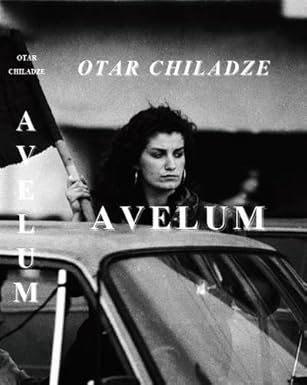
Avelum: A Survey of the Current Press and a Few Love Affairs
99,00 ₾Otar Chiladze’s fifth, greatest, most political and personal novel, translated from the Georgian about the collapse of the Soviet Evil Empire and of the hero’s own private empire of love, an insight into the predicament of a Soviet intellectual and a newly emergent Georgia. Because of high postage costs, available only to UK buyers: if you live outside the UK, please contact me, and I may list the item for 24 hours at a higher price to cover the additional postage costs.

A Man Was Going Down the Road
99,00 ₾Based on the legend of Jason and Medea, the novel is a subtle allegory of the conquest of Georgia by Russia (subtle enough to escape the Soviet censor), as well as a reconstruction of life on the Black Sea coast in 700 BC. It is also a study of the conflict between the artist’s ideals and woman’s needs. Beautifully written, this has been many Georgians’ favourite novel: if you live outside the UK and Europe, please contact me, and I may list the item for 24 hours at a higher price to cover the additional postage costs.

Little Women
13,95 ₾Little Women is one classic that has delighted readers of all ages and genders. It’s about four very different sisters who are waiting for their father to come home from the war. Their mother tries to bring them up as creative persons and struggle to survive during the Civil War is what they have in common. This book explores such themes as war and peace, cultural divide between America and Europe, conflict between personal objectives and family obligations, and it’s about love.
Sports Coaching: The Basics
Original price was: 72,00 ₾.58,00 ₾Current price is: 58,00 ₾.Sports Coaching: The Basics is an engaging and provocative introduction to sports coaching which combines coaches’ views and experiences of their work with discussions and topical issues that feature in this fast-growing field. In doing so. coaches are placed at the centre of the discussions relating to philosophical. historical. sociological. psychological and pedagogical interpretations of contemporary practice. Consequently. the book prompts questions such as:
What is coaching?
What does it mean to be a coach?
How do coaches influence athletes/players?
How do coaches learn?
What is it like to be a coach?
In considering these questions. readers are encouraged to reflect upon their experiences of coaching and to start conversations with others about coaches’ work. Therefore. the book is of use for coaches. those interested in studying sports coaching. and coach educators or facilitators of coach learning initiatives.

Sport Management: The Basics
Original price was: 72,00 ₾.58,00 ₾Current price is: 58,00 ₾.Sport Management: The Basics is an engaging and accessible introduction to sport management which considers a range of contemporary philosophical. social. cultural and political matters as they impact on this growing field. Drawing links between academic theory and practice. it explores the current challenges facing managers in the sport industry. addressing topics including:
the history of sport management
the role of the manager
levels of management
the public. private and voluntary sectors
sport management in the global marketplace
With suggestions for further reading throughout the text. a comprehensive chapter on employment and employability. and case studies which explore both theory and practice. Sport Management: The Basics offers a clear and concise introduction for anyone seeking to study or work in sport management.

Memorabilia Collection: Formula 1
55,00 ₾Enter the world of speed, aerodynamics and high-octane horsepower with this comprehensive collection of all things Formula 1. From the engineering precision of the race cars to the continental streets of Monte Carlo, the Memorabilia Collection is an all-access pit stop for this high-pressure sport and is a must-have for all speed junkies. The F1 Memorabilia Collection includes five collectable postcards, five iconic photographs, a world map detailing all the main F1 circuits and a replica newspaper covering stories that have shaped the sport.


Human Genetics: The Basics
Original price was: 72,00 ₾.58,00 ₾Current price is: 58,00 ₾.Human genetics has blossomed from an obscure biological science and explanation for rare disorders to a field that is profoundly altering health care for everyone. This thoroughly updated new edition of Human Genetics: The Basics provides a concise background of gene structure and function through the lens of real examples. from families living with inherited diseases to population-wide efforts in which millions of average people are learning about their genetic selves. The book raises compelling issues concerning:
• The role of genes in maintaining health and explaining sickness
• Genetic testing. gene therapy. and genome editing
• The common ancestry of all humanity and how we are affecting our future.
Written in an engaging. narrative manner. this concise introduction is an ideal starting point for anyone who wants to know more about genes. DNA. genomes. and the genetic ties that bind us all.


