

ინგლისური


























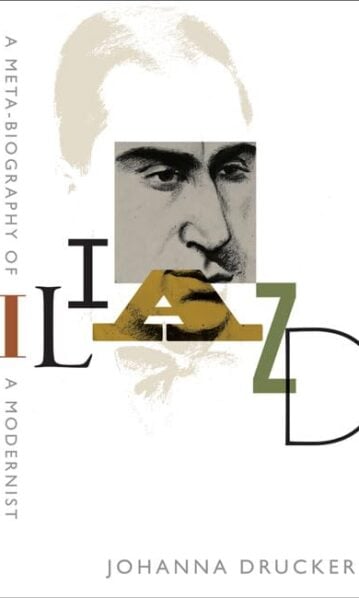
Iliazd: A Meta-Biography of a Modernist (Hopkins Studies in Modernism)
130,00 ₾A captivating portrait of futurist artist Iliazd infused with the reflections of his accidental biographer on the stickiness of the genre.
The poet Ilia Zdanevich, known in his professional life as Iliazd, began his career in the pre-Revolutionary artistic circles of Russian futurism. By the end of his life, he was the publisher of deluxe limited edition books in Paris. The recent subject of major exhibitions in Moscow, his native Tbilisi, New York, and other venues, the work of Iliazd has been prized by bibliophiles and collectors for its exquisite book design and innovative typography. Iliazd collaborated with many major figures of modern art―Pablo Picasso, Sonia Delaunay, Max Ernst, Joán Miro, Natalia Goncharova, and Mikhail Larionov, among others. His 1949 anthology, The Poetry of Unknown Words, was the first international anthology of experimental visual and sound poetry ever published. The list of contributors is a veritable “Who’s Who” of avant-garde writing and visual art. And Iliazd’s unique hands-on engagement with book production and design makes him the ideal case study for considering the book as a modern art form.
Iliazd is the first full-length biography of the poet-publisher, as well as the first comprehensive English-language study of his life and work. Johanna Drucker weaves two stories together: the history of Iliazd’s work as a modern artist and poet, and the narrative of the author’s encounter with his widow and other figures in the process of researching his biography. Drucker’s reflection on what a biographical project entails addresses questions about the relationship between documentary evidence and narrative, between contemporary witnesses and retrospective accounts. Ultimately, Drucker asks how we should understand the connection between the life of an artist and their work.
Enriched with photographs from the Iliazd archive and a wealth of primary documents, the book is a vivid account of a unique contributor to modernism―and to the way we continue to reevaluate the history of twentieth-century culture. Accounts of Drucker’s research during the mid-1980s in the personal archive of Madame Hélène Zdanevich, the poet’s widow, lend the narrative an incredible intimacy. Drucker recounts how, sitting in the studio that Iliazd occupied from the late 1930s until his death in 1975, she was drawn into the circle of scholars who had made him their focus and were doing foundational work on his significance. She also coped with the difference between the widow’s view of the artist as a man she loved and Drucker’s own perception of Iliazd’s significance within a critical approach to history. Iliazd is at once a rich study of a significant figure and a thoughtful reflection on the way a biography creates an encounter with its always absent subject.

The First Social Democracy: The Democratic Republic of Georgia, 1918–1921
148,00 ₾The enthralling, forgotten story of how the world’s first social democracy took shape in the wake of the Russian Revolution.
Following the collapse of the Russian Empire, the small nation of Georgia established its independence in May 1918. Its leaders surprised the world by creating the first social democratic state. Based on a combination of parliamentarianism and direct democracy, it was a representative government of the peasants and workers themselves, with ballots in their hands.
The First Social Democracy is the definitive history of a government that should inspire social democrats today. Stephen F. Jones chronicles how the founders of the new state navigated myriad challenges, including territorial threats from abroad, internal ethnic conflicts, and geopolitical rivalries between the imperial Ottomans, the British, and the Germans. In the midst of these existential challenges, Georgia’s social democrats set about writing a constitution to put the country on a distinctive path of genuine self-government―protecting democratic rights, promoting political pluralism, and championing equality. Jones brings to life the passionate debates that shaped Georgia’s democracy during a moment of acute global instability.
The Democratic Republic of Georgia was strangled in its crib. Just four days after the constitution was ratified, the capital fell to the Red Army. Under Soviet rule, the republic was lost to history. Soviet scholars were forbidden to research this Georgian story, and Western scholars had little interest in a small and peripheral state that was independent for only three years. Recovering a forgotten experiment in democratic citizenship and statecraft, Jones reminds us of those audacious times when Georgians created and defended political freedom against the rise of Soviet communism.