Thames & Hudson


Handmade Type Workshop
40,00 ₾A practical guide to handcrafting creative fonts, packed with tutorials and case studies
Type and font creation remains one of the most popular and important aspects of graphic design, and this book adds to these studies by focusing on the handmade aesthetic, tapping into its resurgent popularity among designers, illustrators and type enthusiasts alike.
This practical guide to handcrafting creative fonts is packed with tutorials, profiles and inspirational showcases from a range of international contemporary practitioners, including Lisa Congdon, Toshi Tajima, Mathilde Nivet, Tyrone Ohia, Honey Design, Amandine Alessandra and many more.
Taking font creation back to basics, Handmade Type Workshop explores innovative ways to design contemporary lettering of all kinds, examining everything from classic design examples to 3D and illustrated fonts, digital lettering and radical conceptual alphabets.
Handmade Type Workshop is ideal for anyone looking to move beyond existing typography and fonts to create, explore and use original or customized letterforms.
Table of Contents
1. Character Creation: Illustrated or hand-drawn; Printed, stitched or cut; Digitally drawn; 3D / Installation; Found or photographed
2. Font Creation: Preparing characters; Creating a font family
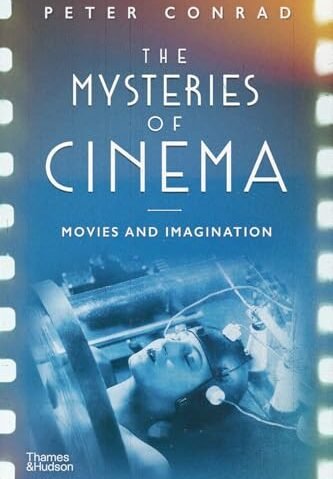
Mysteries of Cinema: Movies & Imagination
47,00 ₾Ranging from the late nineteenth century to the present day, this exhilarating survey by cultural critic Peter Conrad explores the ways film has changed how we see the world.
This is a thematic roller-coaster ride through cinema history, with film expert Peter Conrad in the seat beside you. Thoroughly international, this book ranges from Fay Wray to Satyajit Ray, from Buster Keaton to Kurosawa, from westerns to nouvelle vague. Conrad explores the medium’s relationship to speed, technology, fantasy, horror, dream, color, sound, light, and shadow with reference to scores of films, from the earliest nineteenth-century silent experiments to the latest multisensory Hollywood blockbusters.
The author’s insights are amplified by voices from inside and outside the industry: directors and critics are included alongside artists, writers, philosophers, and historians ranging from Leo Tolstoy to Salvador Dalí, Theodor Adorno to Philip Roth. Arranged by topics, such as “Meta-Movie” and “The Physics of Film,” rather than chronological events, The Mysteries of Cinema focuses on film’s otherworldly, hypnotic, and magical qualities. Perfect for both movie fans who will discover new films and directors, and for students of film who will see familiar classics in a new light, this volume is full of unique insights into the genre. Combining his vast knowledge with a forensic eye for a director’s every quirk and mannerism, Conrad offers a fascinating and thrilling exploration of film

Atlantis
32,00 ₾With more than two million copies sold in more than a dozen languages, the Art & Imagination series provides illustrated introductions by distinguished writers and scholars to the worlds of mythology, symbols, and sacred traditions. This classic series has now been redesigned and reformatted for a new generation of readers, and it launches with the following four titles. The mythical lost island of Atlantis has preoccupied thinkers from Plato to Rudolf Steiner (and a fair number of eccentrics as well) for more than two thousand years. 152 illustrations, 30 in color/
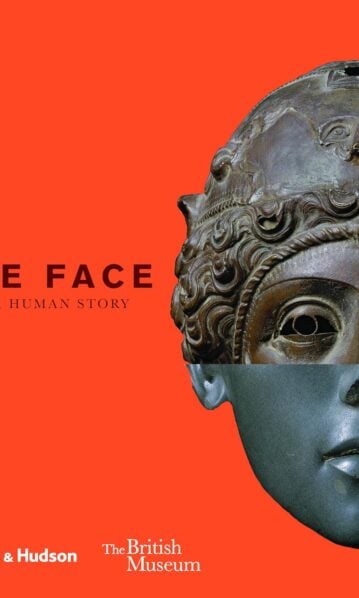
Face
55,00 ₾An exquisitely designed and engrossing thematic study of the representation of the face on objects and in works of art from across the globe and throughout history
The face is not only central to identity, but is also the primary vehicle for human expression, emotion, and character. It signifies intellect and power, is often regarded as a window into the soul, and is the focus of attention when individuals meet. How have different cultures depicted faces―whether a likeness or idealized; whether masked or revealed; whether newborn, in the prime of life, dying, or even deceased? Why has the depiction of the human face been so central to artistic expression in all world cultures?
Art historian Debra Mancoff explores the depiction of the human face through the full range of objects and works of art in the collection of the British Museum, and she discovers how the face subtly conveys the full spectrum of human emotion across continents and through the centuries. Arranged thematically (Birth and Childhood; Love and Beauty; Faith, Ritual, and Mythology; Rulers and Warfare; Identity and Disguise; Everyday Life; Death and the Afterlife), each of the book’s chapters begins with a brief introduction before depicting faces in various pairings and groupings, offering insights into experiences that we all share as human beings.
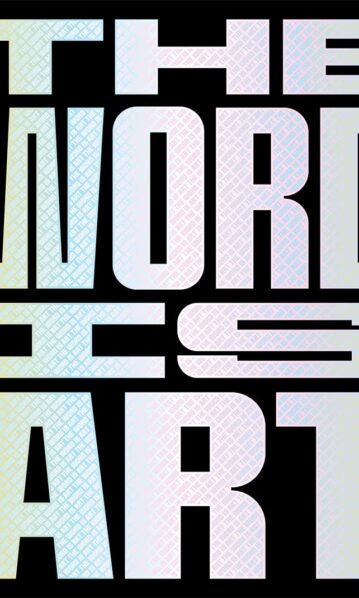
Word is Art
65,00 ₾There has been much scaremongering about the ‘death of the book’, and how, as words find new ways and means of transmission, young people might gradually begin to shun writing. In the digital age, text becomes information, and information strives to become free. But what value can text hold in the sphere of visual art? How is such text different from poetry? Can the poetic itself be visual art, or is text in this context consigned to the realms of gimmick and catchphrase? Looking at the work of a broad range of artists including Bruce Nauman, Julien Breton, Jeremy Deller, Takashi Murakami, Tracey Emin, Christian Boltanski and many more, The Word is Art examines each of these questions, contending above all that in the digital and online age, words have become more important than ever. With the advent of texting and social media, many predicted the debasement of language, and some have pointed to evidence of this in our so-called ‘post-truth’ culture. Artist Michael Petry demonstrates that, on the contrary, words remain critical, powerful and central to art practice.
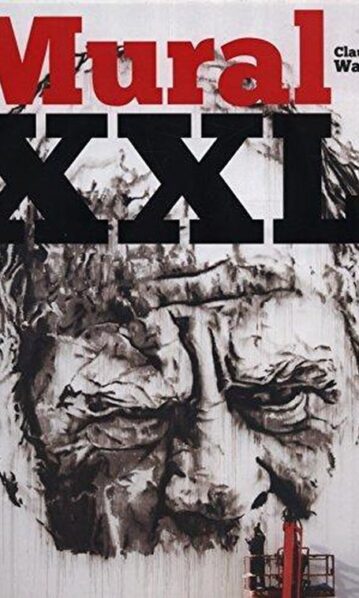
Mural XXL
55,00 ₾The first book to focus on the new trend in graffiti and street art: permanent murals on a gigantic scale
Once upon a time, illegal graffiti and street art were modest in scale, hastily created in hours or even minutes and destroyed just as quickly by authorities, vandals, or the weather. Now, however, architects, urban planners, and development companies have begun to support the creation of large murals, allowing street artists and graffiti artists to make carefully planned, more permanent works, sometimes covering entire buildings, and adding a whole new visual dimension to the world’s cities.
For this spectacular volume, Claudia Walde, whose own recent 1,800-square-foot, brilliantly colored mural on the Alte Messe, Leipzig, was created in just one grueling week of work, has selected more than 200 of the best XXL mural works from around the world and profiled thirty artists who pioneered this trend. Working in dangerous conditions, hundreds of yards above the ground, yet always keenly aware of the viewer’s perspective from street level, these new street muralists are as fearless and technically skilled as they are brilliant and creative.
With exclusive commentary from the practitioners as well as detailed information about their planning, methods, challenges, and inspirations, Mural XXL also includes a map identifying exciting murals around the world. 275 color illustrations