2015



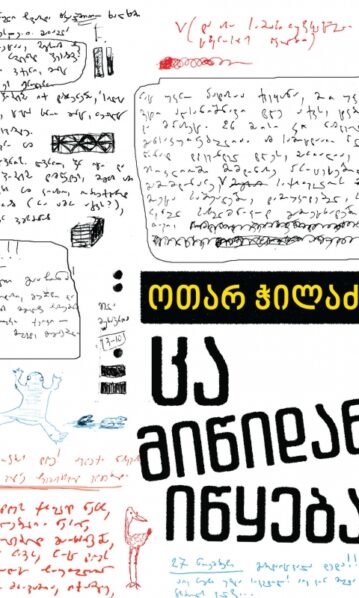
ცა მიწიდან იწყება
14,95 ₾ოთარ ჭილაძის ჩანაწერების ახალი, შევსებული გამოცემა, ფოტოებითა და ავტორის ხელნაწერი ტექსტებით. დიდი მწერლის გამოუქვეყნებელი ჩანაწერები. ყველაზე ავტობიოგრაფიული წიგნი, რომელსაც ოთარ ჭილაძე მთელი ცხოვრება სიმარტოვეში წერდა. აქ ნახავთ მწერლის ყოველდღიურ განცდებსა თუ ემოციებს, შემოქმედებით ლაბორატორიას, გამოხმაურებებს ამა თუ იმ მოვლენაზე, შეხედულებებს ცნობილ ადამიანებზე. ჩანაწერები გასდევს მთელ მის შემოქმედებით ცხოვრებას 1955 წლიდან გარდაცვალებამდე.

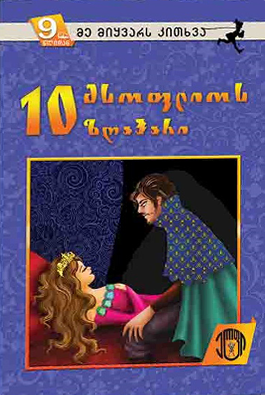
მსოფლიოს 10 ზღაპარი
4,90 ₾ამ კრებულში შეტანილია ბავშვებისთვის საყვარელი 10 უცხოური ზღაპარი, რომლებიც მათ აუცილებლად უნდა წაიკითხონ: „ცეროდენა“, „მძინარე მზეთუნახავი“, „მებადურისა და ოქროს თევზის ზღაპარი“, „თოვლის დედოფალი“, „გულადი თერძი“, „ზარმაცას თავგადასავალი“, „მხატვარი მელა“, „ალი ბაბა და ორმოცი ყაჩაღი“, „საგანძურის უძვირფასესი განძი“ და „პალე მარტოა ქვეყანაზე“.

The Costume History
80,00 ₾The evolution of style from antiquity to 1888
Originally published in France between 1876 and 1888, Auguste Racinet’s Le Costume Historique was in its day the most wide-ranging and incisive study of clothing ever attempted. Covering the world history of costume, dress, and style from antiquity through to the end of the 19th century, the six volume work remains completely unique in its scope and detail.
This TASCHEN reprint presents Racinet’s exquisitely precise color illustrations, as well as his delightful descriptions and often witty commentary. Spanning everything from ancient Etruscan attire to French women’s couture, material is arranged according to Racinet’s original plan by culture and subject. As expansive in its reach as it is passionate in its research and attention to detail, Racinet’s Costume History is an invaluable reference for students, designers, artists, illustrators, and historians; and a rich source of inspiration for anyone with an interest in clothing and style.

Bosch
58,00 ₾Hieronymus Bosch’s meticulous visions of the grotesque, debauched, and divine
As cryptic as they are compelling, the masterpieces of Hieronymus Bosch (c. 1450–1516) remain some of the most enduring enigmas of the art world. Their intricate, allegorical, and often startling content has captivated not only art historians, but also fashion designers, rock stars, writers, and punk rockers, as well as countless modern and contemporary artist successors.
Although rooted in the Old Netherlandish tradition, Bosch developed a highly subjective, richly suggestive style to render both the celestial bliss of heaven and the grotesque tortures of hell, most famously and meticulously excecuted in The Garden of Earthly Delights. Here, as in his other known works, his artistic language combined religious humility with a razor-sharp wit, often playing off pictorial versions of contemporary proverbs or figures of speech.
This book ties together the elusive threads of Bosch’s oeuvre to provide a concise introduction to an at once haunting and enthralling pictorial world.

Turner
58,00 ₾Turner’s iridescent tableaux
In the work of Joseph Mallord William Turner (1775–1851) lies an impact akin to a sudden acquisition of sight. His landscapes and seascapes scorch the eye with such ravishing light and color, with such elemental force, it is as if the sun itself were gleaming out of the frame.
Appropriately known as “the painter of light,” Turner worked in print, watercolor, and oils to transform landscape from serene contemplative scenes to pictures pulsating with life. He anchored his work to the River Thames and to the sea, but in the historical context of the Industrial Revolution, also integrated boats, trains, and other markers of human activity, which juxtaposes the thrust of civilization against the forces of nature.
This book covers Turner’s illustrious, wide-ranging repertoire to introduce an artist who combined a traditional genre with a radical modernism.

Le Corbusier
58,00 ₾The man with a modern mission
Born Charles-Édouard Jeanneret, Le Corbusier (1887–1965) is widely acclaimed as the most influential architect of the 20th century. From private villas to mass social housing projects, his radical ideas, designs, and writings presented a whole-scale reinvention not only of individual structures, but of entire concepts of modern living.
Le Corbusier’s work made distinct developments over the years, from early vernacular houses in Switzerland through dazzling white, purist villas to dynamic syntheses of art and architecture such as the chapel at Ronchamp and the civic buildings in Chandigarh, India. A hallmark throughout was his ability to combine functionalist aspirations with a strong sense of expressionism, as well as a broader and empathetic understanding of urban planning. He was a founding member of the Congrès international d’architecture moderne (CIAM), which championed “architecture as a social art.”
This book presents some of Le Corbusier’s landmark projects to introduce an architect, thinker, and modern pioneer who, even in his unrealized projects, offered discussion and inspiration for generations to come.

Caravaggio
58,00 ₾The Baroque genius who electrified art history
Michelangelo Merisi da Caravaggio (1571–1610) was always a name to be reckoned with. Notorious bad boy of the Italian Baroque, the artist was at once celebrated and controversial, violent in temper, precise in technique, a creative master, and a man on the run.
Though famed for his dramatic use of color, light, and shadow, it was above all Caravaggio’s boundary-breaking naturalism which scorched his name into the annals of art history. From the dirtied soles of feet to the sexualized languor of bare flesh, the artist allowed even sacred and biblical scenes to unfold with a startling, often visceral humanity. This vivid pictorial world was accompanied by an equally intense personal biography, scored by gambling, debts, drunken brawls, and even a murder charge.
This book brings together more than 50 of Caravaggio’s most famous and revolutionary works to explore how and why this artist is now considered the most important painter of the early Baroque period and one of the defining influences of art history, without whom Ribera, Vermeer, Rembrandt, Delacroix, Courbet, and Manet could never have painted the way they did.

Cubism
58,00 ₾Deconstructing perspective with Picasso and peers
Pioneered by Picasso and Braque, Cubism has been described as the first avant-garde art movement of the 20th century. With inspiration from African and Native American art and sculpture, its practitioners deconstructed European conventions of viewpoint, form, perspective to create flattened, fragmented, and revolutionary images.
Picasso’s celebrated painting Les Demoiselles d’Avignon is typically regarded as the original cubist work, with its radical fracturing of objects and figures into distinct areas, corresponding to multiple different viewpoints. Cubism thereafter developed two distinct trends: Analytical Cubism, which continued to interweave perspectival planes in muted blacks, greys and ochre, and later Synthetic Cubism, characterised by simpler shapes, brighter colors, and collage elements such as newspaper.
This book presents the prime protagonists of Cubism, with work from artists including Pablo Picasso, Georges Braque, Fernand Léger, Juan Gris, Albert Gleizes, and Robert Delaunay.

Rothko
58,00 ₾Tragedy, ecstasy, and doom
Resisting interpretation or classification, Mark Rothko (1903–1970) was a prominent advocate for the artist’s consummate freedom of expression. Although identified as a key protagonist of the Abstract Expressionist movement, first formed in New York City, Rothko rejected the label and insisted instead on “a consummated experience between picture and onlooker.”
Following a repertoire of figurative works, Rothko developed his now iconic canvases of bold color blocks in red, yellow, ochre, maroon, black, or green. With these shimmering, pulsating color masses, Rothko stressed that he had not removed the human figure but rather put symbols or shapes in its place. These intense color forms contained all the tragedy of the human condition. At the same time, Rothko explicitly empowered the viewer in the expressive potential of his work. He believed “A picture lives by companionship, expanding and quickening in the eyes of the sensitive observer.”
From his early development through to his most famous color fields, this book introduces the intellect and influence of Rothko’s dramatic, intimate, and revolutionary work.

Rivera
58,00 ₾A revolutionary spirit in modern art
Diego Rivera (1886–1957) is a loud presence on the art historical stage. With devout political principles and a turbulent romantic history, he was at once husband and paladin of Frida Kahlo, advocate and adversary of Stalin’s Soviet Union, and liberator and traitor of Leon Trotsky.
Vibrant, graphic, and often monumental, Rivera’s paintings carry the same live political and passionate charge as his personal biography. Fusing European influences such as Cubism with a socialist ideology and an exaltation of Mexico’s indigenous and popular heritage, he created a new iconography for art history and for his country. He became one of the most important figures in the Mexican mural movement and won international acclaim for his public wall paintings, in which he presented a utopian yet accessible vision of a post-revolutionary Mexico. In 1931, Rivera was the subject of MoMA’s second ever monographic exhibition.
This book explores the unique blend of influence and ideology which secure Rivera’s place as both a unique and a universal painter, bound to the particular turbulent experience of early 20th century Mexico, and yet preoccupied with subjects such as revolution and class inequity which continue to speak to us today.


Psychology from An Empirical Standpoint
73,00 ₾Franz Brentano is one of the founding fathers of twentieth century philosophy, celebrated for introducing the concept of intentionality to philosophy as well as making significant contributions to ethics and logic. His work exerted great influence on major philosophers such as Edmund Husserl, but also philosophers travelling in the opposite direction, such Gottlob Frege. He counted Sigmund Freud amongst his students and Freud expressed great admiration for his teacher in several letters.
Psychology from an Empirical Standpoint is Brentano’s most important and brilliant work. It helped to establish psychology as a scientific discipline, but did so in a highly original and distinctive manner by arguing for a form of introspectionism. Brentano argued that consciousness is always unified and that the hallmark of the mind is that one’s thoughts are always directed towards something – his famous theory of ‘intentionality’ – arguments that have deep implications not just for philosophy but psychology, cognitive science and consciousness studies.
With a new foreword by Tim Crane.
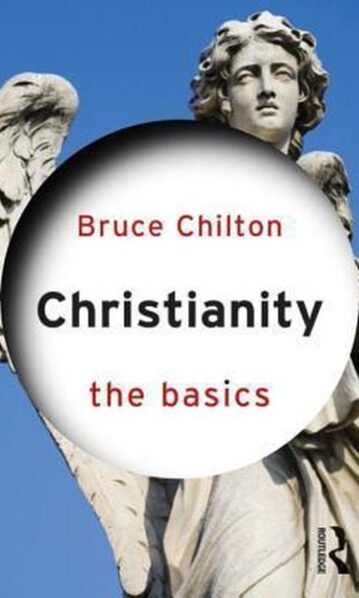
Christianity: The Basics
Original price was: 72,00 ₾.58,00 ₾Current price is: 58,00 ₾.Christianity: The Basics is a compelling introduction to both the central pillars of the Christian faith and the rich and varied history of this most global of global religions. This book traces the development of Christianity through an exploration of some of the key beliefs. practices and emotions which have been recurrent symbols through the centuries:
Christ. the kingdom of heaven and sin
Baptism. Eucharist and prayer
Joy. divine union and self denial
Encompassing the major epochs of Christian history and examining the unity and divisions created by these symbols. Christianity: The Basics is both a concise and comprehensive introduction to the Christian tradition.

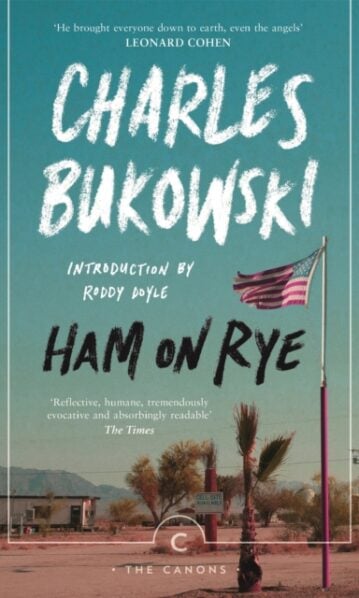
Ham on Rye
27,00 ₾Charles Bukowski is one of the greatest authors of the twentieth century. The autobiographical Ham on Rye is widely considered his finest novel. A classic of American literature, it offers powerful insight into his youth through the prism of his alter-ego Henry Chinaski, who grew up to be the legendary Hank Chinaski of Post Office and Factotum.

Dying of the Light
27,00 ₾A whisperjewel from Gwen Delvano calls Dirk t’Larien across space and beyond the Tempter’s Veil to Worlorn, a dying Festival planet of rock and ice. Warlorn is slowly drifting through twilight to neverending night; as the planet sinks into darkness, so its inhabitants face annihilation.Seven years ago, on Avalon, Gwen was Dirk’s lover, his Guenevere; now she wears the jade-and-silver bond of Jaantony Riv Wolf high-Ironjade Vikary, a barbarian visionary, an outcast from his own people for his acts of violence. And Garse Janacek, Jaan’s *teyn*, his shieldmate, is also bound to Gwen – in hatred. Dirk, a rogue and a wanderer, is called to be saviour of the three who are bonded together in love and hate. But in breaking their triangle, he could lose all …
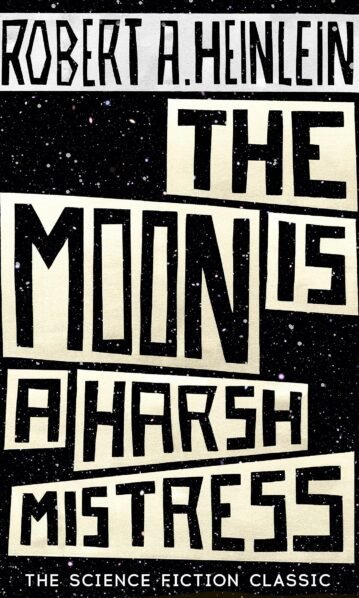
The Moon is a Harsh Mistress
27,00 ₾In 2075, the Moon is no longer a penal colony. But it is still a prison…
Life isn’t easy for the political dissidents and convicts who live in the scattered colonies that make up lunar civilisation. Everything is regulated strictly, efficiently and cheaply by a central supercomputer, HOLMES IV.
When humble technician Mannie O’Kelly-Davis discovers that HOLMES IV has quietly achieved consciousness (and developed a sense of humour), the choice is clear: either report the problem to the authorities… or become friends.
And perhaps overthrow the government while they’re at it.
The Moon is a Harsh Mistress has been called Robert A. Heinlein’s crowning achievement. His best-known novels include Starship Troopers Mistress and Stranger in a Strange Land.
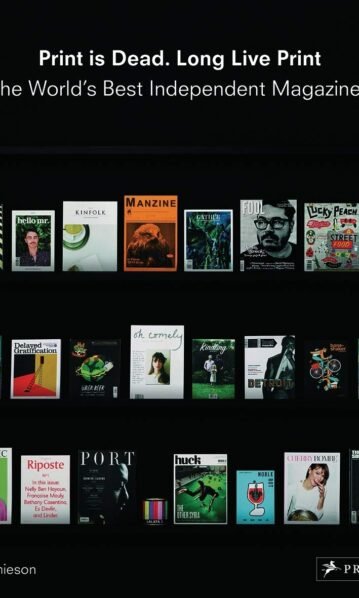
Print is Dead, Long Live Print
65,00 ₾This book is a dynamic and generously illustrated survey of independent publications that are breathing new life into old media. While magazines such as Spin and The Face have disappeared from newsstands and mailboxes, non-traditional periodicals with names like Boneshaker, Lucky Peach, Anorak, WRAP, and Kinfolk are taking their places on shelves and coffee tables everywhere. Print is Dead. Long Live Print is an eye-opening look into the explosion of independent, creatively led magazines that are currently shaping the future of print journalism. It showcases over 50 examples of innovative magazines from around the globe. The book divides the magazines into genres, including art and culture, travel, sports, and style. Each periodical is represented by selected spreads and newly commissioned photography, along with a brief introductory text. Interviews with editors, art directors, and founders from each magazine offer background information as well as insight into why they decided to start their publications and the challenges they face. A directory at the back lists dozens more magazines worth investigating. This paean to the printed word is filled with creativity and innovation as well as hope for the future of print media.
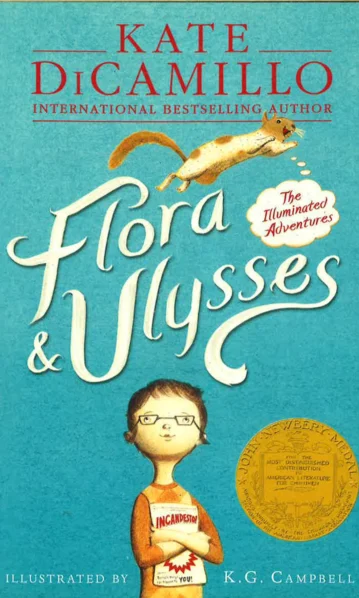
Flora & Ulysses
24,00 ₾Holy unanticipated occurrences! From #1 New York Times best-selling author Kate DiCamillo comes a laugh-out-loud story filled with eccentric, endearing characters — a novel interspersed with comic-style graphic sequences and full-page illustrations, all rendered in black and white by K. G. Campbell.
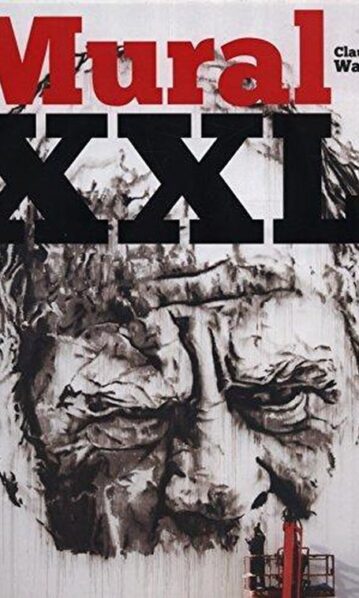
Mural XXL
55,00 ₾The first book to focus on the new trend in graffiti and street art: permanent murals on a gigantic scale
Once upon a time, illegal graffiti and street art were modest in scale, hastily created in hours or even minutes and destroyed just as quickly by authorities, vandals, or the weather. Now, however, architects, urban planners, and development companies have begun to support the creation of large murals, allowing street artists and graffiti artists to make carefully planned, more permanent works, sometimes covering entire buildings, and adding a whole new visual dimension to the world’s cities.
For this spectacular volume, Claudia Walde, whose own recent 1,800-square-foot, brilliantly colored mural on the Alte Messe, Leipzig, was created in just one grueling week of work, has selected more than 200 of the best XXL mural works from around the world and profiled thirty artists who pioneered this trend. Working in dangerous conditions, hundreds of yards above the ground, yet always keenly aware of the viewer’s perspective from street level, these new street muralists are as fearless and technically skilled as they are brilliant and creative.
With exclusive commentary from the practitioners as well as detailed information about their planning, methods, challenges, and inspirations, Mural XXL also includes a map identifying exciting murals around the world. 275 color illustrations
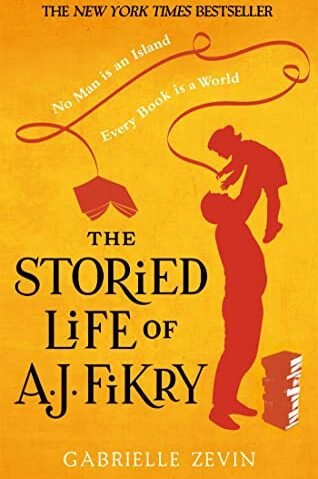
Storied Life of A.J. Fikry
25,00 ₾On the faded Island Books sign hanging over the porch of the Victorian cottage is the motto “No Man Is an Island; Every Book Is a World.” A. J. Fikry, the irascible owner, is about to discover just what that truly means. A. J. Fikry’s life is not at all what he expected it to be. His wife has died, his bookstore is experiencing the worst sales in its history, and now his prized possession, a rare collection of Poe poems, has been stolen. Slowly but surely, he is isolating himself from all the people of Alice Island—from Lambiase, the well-intentioned police officer who’s always felt kindly toward Fikry; from Ismay, his sister-in-law who is hell-bent on saving him from his dreary self; from Amelia, the lovely and idealistic (if eccentric) Knightley Press sales rep who keeps on taking the ferry over to Alice Island, refusing to be deterred by A.J.’s bad attitude. Even the books in his store have stopped holding pleasure for him. These days, A.J. can only see them as a sign of a world that is changing too rapidly.And then a mysterious package appears at the bookstore. It’s a small package, but large in weight. It’s that unexpected arrival that gives A. J. Fikry the opportunity to make his life over, the ability to see everything anew. It doesn’t take long for the locals to notice the change overcoming A.J.; or for that determined sales rep, Amelia, to see her curmudgeonly client in a new light; or for the wisdom of all those books to become again the lifeblood of A.J.’s world; or for everything to twist again into a version of his life that he didn’t see coming. As surprising as it is moving, The Storied Life of A. J. Fikry is an unforgettable tale of transformation and second chances, an irresistible affirmation of why we read, and why we love.