

Penguin
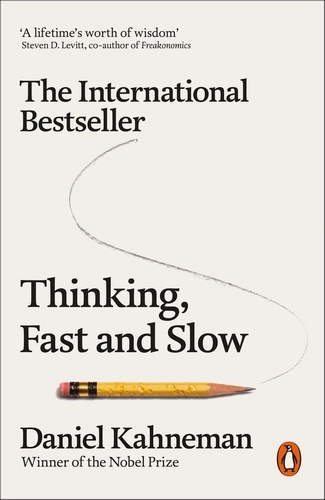
Thinking, Fast and Slow
75,00 ₾Why is there more chance we’ll believe something if it’s in a bold type face? Why are judges more likely to deny parole before lunch? Why do we assume a good-looking person will be more competent? The answer lies in the two ways we make choices: fast, intuitive thinking, and slow, rational thinking. This book reveals how our minds are tripped up by error and prejudice (even when we think we are being logical), and gives you practical techniques for slower, smarter thinking, enabling you to make better decisions at work, at home, and in everything you do.


Burmese Days – George Orwell
26,00 ₾Set in the days of the Empire, with the British ruling in Burma, Orwell’s book describes corruption and imperial bigotry. Flory, a white timber merchant, befriends Dr Veraswami, a black enthusiast for the Empire, whose downfall can only be prevented by membership at an all-white club.




Digital Minimalism
30,00 ₾Do you find yourself endlessly scrolling through social media or the news while your anxiety rises? Are you feeling frazzled after a long day of endless video calls?
In this timely book, professor Cal Newport shows us how to pair back digital distractions and live a more meaningful life with less technology.
By following a ‘digital declutter’ process, you’ll learn to:
· Rethink your relationship with social media
· Prioritize ‘high bandwidth’ conversations over low quality text chains
· Rediscover the pleasures of the offline world
Take back control from your devices and find calm amongst the chaos with Digital Minimalism.
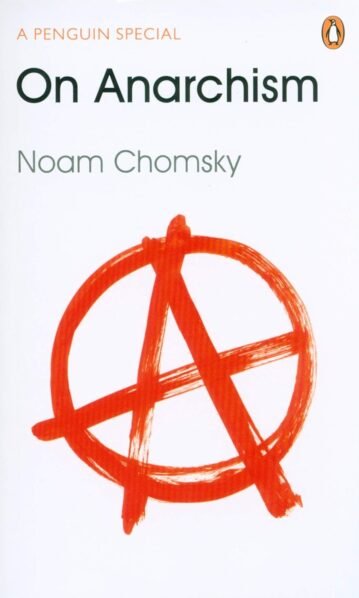
On Anarchism
24,00 ₾With the specter of anarchy being invoked by the Right to sow fear, a cogent explanation of the political philosophy known as anarchism has never been more urgently needed. In On Anarchism, radical linguist, philosopher, and activist Noam Chomsky provides it. Known for his brilliant evisceration of American foreign policy, state capitalism, and the mainstream media, Chomsky remains a formidable and unapologetic critic of established authority and perhaps the world’s most famous anarchist.
On Anarchism sheds a much-needed light on the foundations of Chomsky’s thought, specifically his constant questioning of the legitimacy of entrenched power. The book gathers his essays and interviews to provide a short, accessible introduction to his distinctively optimistic brand of anarchism. Chomsky eloquently refutes the notion of anarchism as a fixed idea, suggesting that it is part of a living, evolving tradition, and he disputes the traditional fault lines between anarchism and socialism, emphasizing the power of collective, rather than individualist, action.
Including a retrospective interview with Chomsky where the author assesses his writings on anarchism to date, this is a book that is sure to challenge, provoke, and inspire. Profoundly relevant to our times, On Anarchism is a touchstone for political activists and anyone interested in deepening their understanding of anarchism and the power of collective action.
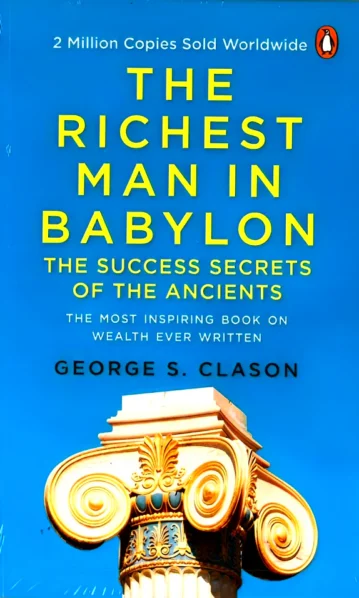
Richest Man in Babylon
35,00 ₾“As a young man, I came across George Samuel Clason’s classic 1926 book The Richest Man in Babylon, which offered commonsense financial advice told through ancient parables. I recommend it to everyone.” –Tony Robbins, Money: Master the Game. The ancient Babylonians were the first people to discover the universal laws of prosperity. In his classic bestseller, “The Richest Man in Babylon,” George S. Clason reveals their secrets for creating, growing, and preserving wealth. Through these entertaining tales of merchants, tradesmen, and herdsmen, you’ll learn how to keep more out what you earn; get out of debt; put your money to work; attract good luck; choose wise investments; and safeguard a lasting fortune
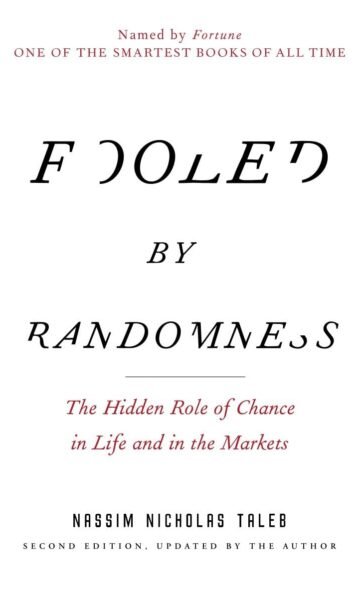
Fooled by Randomness
34,00 ₾Everyone wants to succeed in life. But what causes some of us to be more successful than others? Is it really down to skill and strategy – or something altogether more unpredictable?
This book is the bestselling sensation that will change the way you think about business and the world. It is all about luck: more precisely, how we perceive luck in our personal and professional experiences. Nowhere is this more obvious than in the markets – we hear an entrepreneur has ‘vision’ or a trader is ‘talented’, but all too often their performance is down to chance rather than skill. It is only because we fail to understand probability that we continue to believe events are non-random, finding reasons where exist.
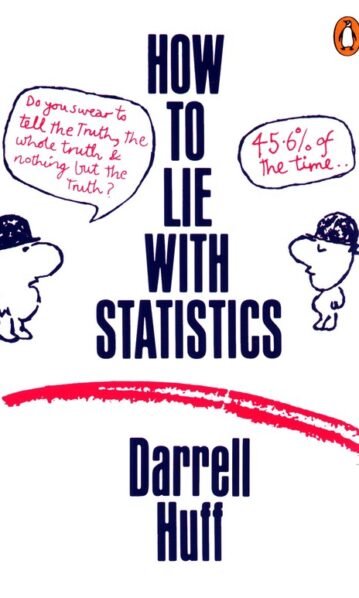
How to Lie with Statistics
27,00 ₾Over Half a Million Copies Sold–an Honest-to-Goodness Bestseller
Darrell Huff runs the gamut of every popularly used type of statistic, probes such things as the sample study, the tabulation method, the interview technique, or the way the results are derived from the figures, and points up the countless number of dodges which are used to full rather than to inform.

Kraftwerk: Future Music From Germany
28,00 ₾The story of the phenomenon that is Kraftwerk, and how they revolutionised our cultural landscape
‘We are not artists nor musicians. We are workers.’ Ignoring nearly all rock traditions, experimenting in near-total secrecy in their Düsseldorf studio, Kraftwerk fused sound and technology, graphic design and performance, modernist Bauhaus aesthetics and Rhineland industrialisation – even human and machine – to change the course of modern music. This is the story of Kraftwerk the cultural phenomenon, who turned electronic music into avant-garde concept art and created the soundtrack to our digital age.
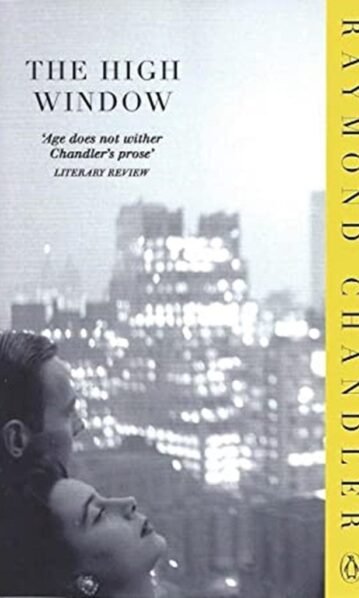
High Window
27,00 ₾“The High Window”” is a classic novel by the master of hard-boiled crime. Philip Marlowe’s on a case: his client, a dried-up husk of a woman, wants him to recover a rare gold coin called a Brasher Doubloon, missing from her late husband’s collection. That’s the simple part. It becomes more complicated when Marlowe finds that everyone who handles the coin suffers a run of very bad luck: they always end up dead. That’s also unlucky for a private investigator, because leaving a trail of corpses around LA gets cops’ noses out of joint. If Marlowe doesn’t wrap this one up fast, he’s going to end up in jail – or worse, in a box in the ground…””Anything Chandler writes about grips the mind from the first sentence””. (“”Daily Telegraph””). “”One of the greatest crime writers, who set standards others still try to attain””. (“”Sunday Times””). “”Chandler is an original stylist, creator of a character as immortal as Sherlock Holmes””
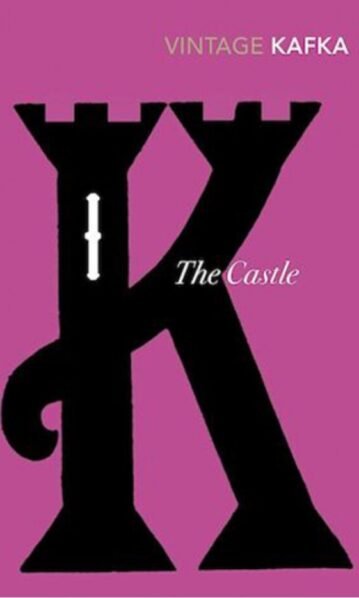
Castle
30,00 ₾This is the story of K, his arrival in a village where he is never accepted, and his ensuing relentless struggle with authority in order to gain entrace to the castle that seems to rule it. K’s isolation and confusion, his desperation for the approval of elusive and anonymous powers, epitomises Kafka’s vision of twentieth-century alienation and anxiety.

Plague
29,00 ₾The Plague is Albert Camus’s world-renowned fable of fear and courage
The townspeople of Oran are in the grip of a deadly plague, which condemns its victims to a swift and horrifying death. Fear, isolation and claustrophobia follow as they are forced into quarantine. Each person responds in their own way to the lethal disease: some resign themselves to fate, some seek blame, and a few, like Dr Rieux, resist the terror.
An immediate triumph when it was published in 1947, The Plague is in part an allegory of France’s suffering under the Nazi occupation, and a story of bravery and determination against the precariousness of human existence.
‘A matchless fable of fear, courage and cowardice’ Independent
‘Magnificent’The Times

Summer Crossing
26,00 ₾Grady – beautiful, rich, flame-haired, defiant – is the sort of girl people stare at across a room. The daughter of an important man, who people want to be introduced to. A girl to whom people sense something is going to happen …
But her privileged society life of parties, debutantes and dresses leaves her wanting more. And excitement comes in the form of the highly unsuitable Clyde, a Brooklyn-born, Jewish parking attendant. When Grady’s parents leave her alone for the first time in their New York penthouse one summer, their secret affair intensifies. As a heat wave envelops the city, Grady gets in deeper and deeper and cares less about the consequences. Soon, though, she will be forced to make decisions – choices that will forever affect her future once the long, sultry summer comes to an end.
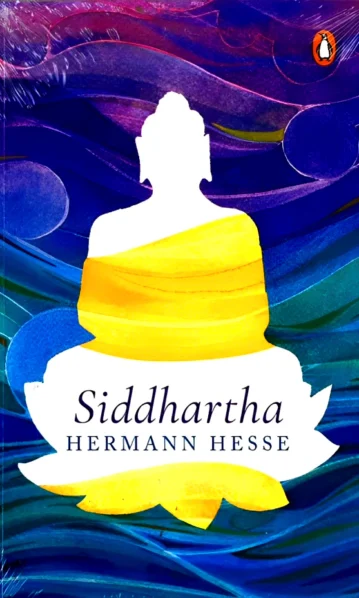
Siddhartha
28,00 ₾Siddhartha,novel by Hermann Hesse based on the early life of Buddha, published in German in 1922. It was inspired by the author’s visit to Sri Lanka and Indonesia before World War I. Illness prevented him from visiting India itself as he had planned, but Hesse returned from his visit to South Asia with an idealized view of an India grounded in spirituality and religious devotion that remained with him for the rest of his life.The theme of the novel is the search for self-realization by a young Brahman, Siddhartha. Realizing the contradictions between reality and what he has been taught, he abandons his comfortable life to wander. His goal is to find the serenity that will enable him to defeat fear and to experience with equanimity the contrasts of life, including joy and sorrow, life and death. Asceticism, including fasting, does not prove satisfying, nor do wealth, sensuality, and the attentions of a lovely courtesan. Despairing of finding fulfillment, he goes to the river and there learns simply to listen. He discovers within himself a spirit of love and learns to accept human separateness. In the end, Siddhartha grasps the wholeness of life and achieves a state of bliss and highest wisdom.