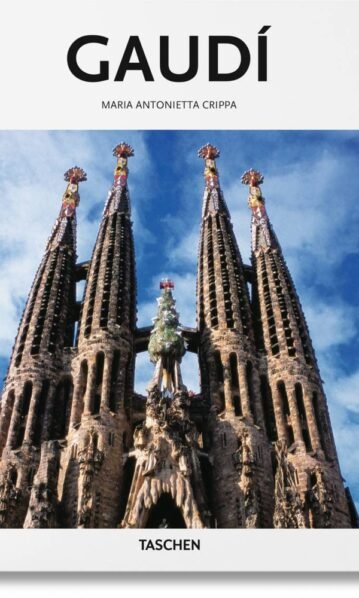
Taschen

Cubism
58,00 ₾Deconstructing perspective with Picasso and peers
Pioneered by Picasso and Braque, Cubism has been described as the first avant-garde art movement of the 20th century. With inspiration from African and Native American art and sculpture, its practitioners deconstructed European conventions of viewpoint, form, perspective to create flattened, fragmented, and revolutionary images.
Picasso’s celebrated painting Les Demoiselles d’Avignon is typically regarded as the original cubist work, with its radical fracturing of objects and figures into distinct areas, corresponding to multiple different viewpoints. Cubism thereafter developed two distinct trends: Analytical Cubism, which continued to interweave perspectival planes in muted blacks, greys and ochre, and later Synthetic Cubism, characterised by simpler shapes, brighter colors, and collage elements such as newspaper.
This book presents the prime protagonists of Cubism, with work from artists including Pablo Picasso, Georges Braque, Fernand Léger, Juan Gris, Albert Gleizes, and Robert Delaunay.

Rothko
58,00 ₾Tragedy, ecstasy, and doom
Resisting interpretation or classification, Mark Rothko (1903–1970) was a prominent advocate for the artist’s consummate freedom of expression. Although identified as a key protagonist of the Abstract Expressionist movement, first formed in New York City, Rothko rejected the label and insisted instead on “a consummated experience between picture and onlooker.”
Following a repertoire of figurative works, Rothko developed his now iconic canvases of bold color blocks in red, yellow, ochre, maroon, black, or green. With these shimmering, pulsating color masses, Rothko stressed that he had not removed the human figure but rather put symbols or shapes in its place. These intense color forms contained all the tragedy of the human condition. At the same time, Rothko explicitly empowered the viewer in the expressive potential of his work. He believed “A picture lives by companionship, expanding and quickening in the eyes of the sensitive observer.”
From his early development through to his most famous color fields, this book introduces the intellect and influence of Rothko’s dramatic, intimate, and revolutionary work.

Rivera
58,00 ₾A revolutionary spirit in modern art
Diego Rivera (1886–1957) is a loud presence on the art historical stage. With devout political principles and a turbulent romantic history, he was at once husband and paladin of Frida Kahlo, advocate and adversary of Stalin’s Soviet Union, and liberator and traitor of Leon Trotsky.
Vibrant, graphic, and often monumental, Rivera’s paintings carry the same live political and passionate charge as his personal biography. Fusing European influences such as Cubism with a socialist ideology and an exaltation of Mexico’s indigenous and popular heritage, he created a new iconography for art history and for his country. He became one of the most important figures in the Mexican mural movement and won international acclaim for his public wall paintings, in which he presented a utopian yet accessible vision of a post-revolutionary Mexico. In 1931, Rivera was the subject of MoMA’s second ever monographic exhibition.
This book explores the unique blend of influence and ideology which secure Rivera’s place as both a unique and a universal painter, bound to the particular turbulent experience of early 20th century Mexico, and yet preoccupied with subjects such as revolution and class inequity which continue to speak to us today.

Michelangelo
58,00 ₾Michelangelo, in pursuit of the beautiful and sublime
Italian-born Michelangelo di Lodovico Buonarroti Simoni (1475–1564) was a tormented, prodigiously talented, and God-fearing Renaissance man. His manifold achievements in painting, sculpture, architecture, poetry, and engineering combined body, spirit, and God into visionary masterpieces that changed art history forever. Famed biographer Giorgio Vasari considered him the pinnacle of Renaissance achievement. His peers called him simply “Il Divino” (“the divine one”).
This book provides the essential introduction to Michelangelo with all the awe-inspiring masterpieces and none of the queues and crowds. With vivid illustration and accessible texts, we explore the artist’s extraordinary figuration and celebrated style of terribilità (momentous grandeur), which allowed human and biblical drama to exist in compelling scale and fervor. Through the power hubs of Renaissance Italy, we take in his major commissions and phenomenal capacity for compositional schemes, whether the famous Medici library in Florence, or the extraordinary 500-square-meter ceiling (1508–1512) in the Vatican’s Sistine Chapel.
From the towering David to the aching grief and faith of The Pietà and the vivid drama of the Sistine Chapel’s Last Judgment, this is a succinct, dependable reference to a true giant of art history and to some of the most famous artworks in the world.

McCurry Animals
58,00 ₾Steve McCurry photographs the animal kingdom
In Animals, we discover a different side to the famed photographer who skillfully explores animals’ complex relationship with humans and the environment.
Tenderness abounds, particularly in scenes of unkempt street dogs sleeping contentedly next to a human. But there’s also a kind of essential solitude, with animals belonging to no one and simply wandering through life with only their survival instincts to guide them. We witness camels caught in the crossfire during the first Gulf War; a shepherd from Northern Pakistan tenderly feeding his goats; Beverly Hills designer dogs; race horses on a Hong Kong rooftop; an elephant in Thailand, and more images selected by McCurry from his vast archives.
Through McCurry’s lens, we discover an appreciation for each creature’s beauty and silent dignity. This kaleidoscopic collection is at once a beautiful travelogue and a touching tribute to the creatures who share our planet.

Piano
58,00 ₾The exploration and iconoclasm of an Italian master
While some architects have a signature style, Renzo Piano seeks to apply coherent ideas to extraordinarily different projects. His buildings impress as much for their individual impact as for their diversity of scale, material, and form.
Piano rose to international prominence with his codesign of the Pompidou Center in Paris, described by The New York Times as a building that “turned the architecture world upside down.” Since then, he has continued to craft many high-profile cultural spaces, including the Modern Wing of the Art Institute of Chicago; the Morgan Library Renovation and Expansion in New York; and, most recently, the Whitney Museum of American Art, an asymmetric nine-story structure in Manhattan’s Meatpacking District with both indoor and outdoor galleries. In New York and London, the Renzo touch has also transformed the skyline with the towers of the New York Times Building and the Shard, the tallest building in the European Union.
This essential introduction travels from Osaka, Japan, to Bern, Switzerland, and through many cities, structures, and islands in between, to explore the staggering scope of the Renzo Piano repertoire. From the “inside-out” Pompidou to the airy shells of the Tjibaou Cultural Center in Nouméa, New Caledonia, this is a thrilling journey through the beauty of architecture, where, in Piano’s own words, “each time, it is like life starting all over again.”

Interiors Now!
110,00 ₾A tour of contemporary home decor around the world
With an inspirational richness and diversity of styles, these homes, residences, hideaways, and studios will astound and astonish, no matter the taste; be it rustic country cottage, New York–style loft, or bohemian bungalow. This survey of contemporary interior design carefully curates homes from all over the world—from Auckland, New Zealand, to Avignon, France.
Mapped out through hundreds of images by renowned interior photographers, these gorgeous houses offer inspiration and ideas for your next renovation. Many of the selected homes are owned by creatives—designers, filmmakers, and collectors—whose eye for the perfect synthesis of interior elements is impressive, to say the least. Bringing together wallpaper, furniture, textiles, and objet d’art while cautiously balancing color, texture, and form, the creators of these dynamic spaces practice an art form of their own.
Eclectic or minimal, antique or extra-modern, this variety of decor locates contemporary style in all its manifestations, showcasing the endless possibilities and home-making magic of interior design.

Motorcycles
110,00 ₾50 of the most legendary and coveted motorcycles of all time
Dream Rides: The most spectacular bikes on the planet. From the 1894 Hildebrand & Wolfmüller to the 2020 Aston Martin AMB 001, this book lavishly explores 50 of the most desirable motorcycles to have ever sped thrillingly around a circuit or along an open road. From pioneering record-breakers, luxury tourers, and legendary roadracers to GP-winning machines, iconic superbikes, and exotic customs, this book celebrates motorcycle design and engineering at its highest level. Many examples are from acclaimed private collections and very rarely seen. Others are the all-out stars of renowned motorcycle museums—such as the 1938 Brough Superior “Golden Dream” or the 1957 MV Agusta 500 4C, which took John Surtees to World Championship glory. Alongside some early survivors in astonishingly original condition is a stable of fabled racers—the actual machines that were competed on by the likes of Tarquinio Provini, Mike Hailwood, Giacomo Agostini, and Barry Sheene.
The fascinating stories behind these fabulous motorbikes are expertly recounted in detail, alongside stunning imagery specially taken for the book by the world’s leading motorcycle photographers. Also included are rare archival gems, from early posters to remarkable action shots.
A cornucopia of motorcycle treasures and an absolute must-have for all bike enthusiasts!

Basquiat
110,00 ₾The legend of Jean-Michel Basquiat is as strong as ever. Synonymous with 1980s New York, the artist first appeared in the late 1970s under the tag SAMO, spraying caustic comments and fragmented poems on the walls of the city. He appeared as part of a thriving underground scene of visual arts and graffiti, hip hop, post-punk, and DIY filmmaking, which met in a booming art world. As a painter with a strong personal voice, Basquiat soon broke into the established milieu, exhibiting in galleries around the world.
Basquiat’s expressive style was based on raw figures and integrated words and phrases. His work is inspired by a pantheon of luminaries from jazz, boxing, and basketball, with references to arcane history and the politics of street life—so when asked about his subject matter, Basquiat answered “royalty, heroism and the streets.” In 1983 he started collaborating with the most famous of art stars, Andy Warhol, and in 1985 was on the cover of The New York Times Magazine. When Basquiat died at the age of 27, he had become one of the most successful artists of his time.
First published in an XXL edition, this unprecedented insight into Basquiat’s art is now available in a compact, accessible volume in celebration of TASCHEN’s 40th anniversary. With pristine reproductions of his most seminal paintings, drawings, and notebook sketches, it offers vivid proximity to Basquiat’s intricate marks and scribbled words, further illuminated by an introduction to the artist from editor Hans Werner Holzwarth, as well as an essay on his themes and artistic development from curator and art historian Eleanor Nairne. Richly illustrated year-by-year chapter breaks follow the artist’s life and quote from his own statements and contemporary reviews to provide both personal background and historical context.

The History of Graphic Design
110,00 ₾Through the turbulent passage of time, graphic design—with its vivid, neat synthesis of image and idea—has distilled the spirit of each age. Surrounding us every minute of every day, from minimalist packaging to colorful adverts, smart environmental graphics to sleek interfaces: graphic design is as much about transmitting information as it is about reflecting society’s cultural aspirations and values.
With his sweeping knowledge of the field, author Jens Müller curates the standout designs for each year, a running sequence of design milestones. This collection of important graphic works represents a long-overdue reflection on the development of a creative field constantly changing and challenging itself. These key pieces act as coordinates through contemporary history, helping us trace the sheer influence of graphic design on our daily lives.



The Star Wars Archives 1999–2005
110,00 ₾From the moment Star Wars burst onto the screen in 1977, audiences have been in equal parts fascinated and appalled by the half-man/half-machine hybrid Darth Vader. In 1999, creator George Lucas began the story of how Anakin Skywalker grew up to train as a Jedi under Obi-Wan Kenobi, found love with the Queen of Naboo, Padmé Amidala, before turning to the dark side of his nature and becoming more machine than man.
After driving the development of nascent digital technology, George Lucas perceived how he could create new creatures and new worlds on a grander scale than ever before. He created the first digital blockbuster, and met fierce resistance when he pushed for widespread digital cameras, sets, characters, and projection – all of which are now used throughout the industry. He essentially popularized the modern way of making movies.
Made with the full cooperation of George Lucas and Lucasfilm, this second volume covers the making of the prequel trilogy — Episode I The Phantom Menace, Episode II Attack of the Clones, and Episode III Revenge of the Sith — and features exclusive interviews with Lucas and his collaborators. The book is profusely illustrated with script pages, production documents, concept art, storyboards, on-set photography, stills, and posters.

The Star Wars Archive
110,00 ₾Star Warsexploded onto our cinema screens in 1977, and the world has not been the same since. After watching depressing and cynical movies throughout the early 1970s, audiences enthusiastically embraced the positive energy of the Star Wars galaxy as they followed moisture farmer Luke Skywalker on his journey through a galaxy far, far away, meeting extraordinary characters like mysterious hermit Obi-Wan Kenobi, space pirates Han Solo and Chewbacca, loyal droids C-3PO and R2-D2, bold Princess Leia Organa and the horrific Darth Vader, servant of the dark, malevolent Emperor.
Writer, director, and producer George Lucas created the modern monomyth of our time, one that resonates with the child in us all. He formed Industrial Light & Magic to develop cutting-edge special effects technology, which he combined with innovative editing techniques and a heightened sense of sound to give audiences a unique sensory cinematic experience.
In this first volume, made with the full cooperation of Lucasfilm, Lucas narrates his own story, taking us through the making of the original trilogy—Episode IV A New Hope, Episode V The Empire Strikes Back, and Episode VI Return of the Jedi—and bringing fresh insights into the creation of a unique universe. Complete with script pages, production documents, concept art, storyboards, on-set photography, stills, and posters, this is the authoritative exploration of the original saga as told by its creator.
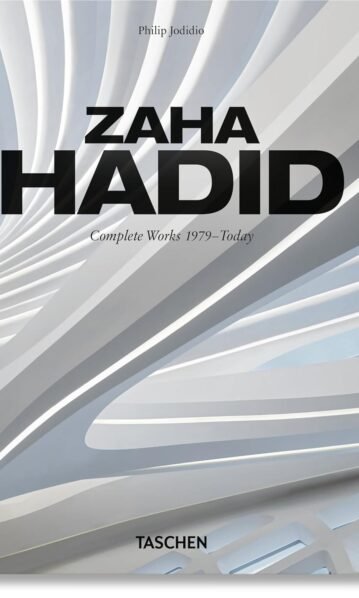
Zaha Hadid. Complete
110,00 ₾Zaha Hadid (1950 – 2016) was a revolutionary architect. For years, she was widely acclaimed and won numerous prizes despite building practically nothing. Some even said her work was simply impossible to build. Yet, during the latter years of her life, Hadid’s daring visions became a reality, bringing a new and unique architectural language to cities and structures such as the Port House in Antwerp, the Al Janoub Stadium near Doha, Qatar, and the spectacular new airport terminal in Beijing.
By her untimely death in 2016, Hadid was firmly established among architecture’s finest elite, working on projects in Europe, China, the Middle East, and the United States. She was the first female architect to win both the Pritzker Prize for architecture and the prestigious RIBA Royal Gold Medal, with her long-time Partner Patrik Schumacher now the leader of Zaha Hadid Architects and in charge of many new projects.
Based on the massive TASCHEN monograph, this book is now available in an accessible edition covering Hadid’s complete works, including ongoing projects. With abundant photographs, in-depth sketches, and Hadid’s own drawings, the volume traces the evolution of her career, spanning not only her most pioneering buildings but also the furniture and interior designs that were integrated into her unique, and distinctly 21st-century, universe.
“A celebration of all that is brave and audacious in her work.”
— Australian Financial Review

The adidas Archive
110,00 ₾More than 100 years ago the brothers Adolf (“Adi”) and Rudolf Dassler made their first pair of sports shoes. Hundreds of groundbreaking designs, epic moments, and star-studded collabs later, this book presents a visual review of the adidas shoe through almost 200 models.
To further develop and tailor his products to athletes’ specific needs, Dassler asked them to return their worn footwear when no longer needed, with all the shoes eventually ending up in his attic (to this day, many athletes return their shoes to adidas, often as a thank you after winning a title or breaking a world record). This collection now makes up the “adidas archive”, one of the largest, if not the largest archive of any sports goods manufacturer in the world—which photographers Christian Habermeier and Sebastian Jäger have been visually documenting in extreme detail for years.
Shot using the highest reproduction techniques, these images reveal the fine details as much as the stains, the tears, the repair tape, the grass smudges, the faded autographs. It’s all here, unmanipulated and captured in extremely high resolution—and with it comes to light the personal stories of each individual wearer. We encounter the shoes worn by West Germany’s football team during its “miraculous” 1954 World Cup win and those worn by Kathrine Switzer when she ran the Boston Marathon in 1967, before women were officially allowed to compete; custom models for stars from Madonna to Lionel Messi; collabs with the likes of Pharrell Williams, Raf Simons, Stella McCartneyor Yohji Yamamoto; as well as the brand’s trailblazing techniques and materials.
Accompanied by expert texts, each picture tells us the why and the how, but also conveys the driving force behind adidas. What we discover goes beyond mere design; in the end, these are just shoes, worn out by their users who have loved them—but they are also first-hand witnesses of our sports, design, and culture history, from the beginnings of the Dassler brothers and the founding of adidas until today.

Walton Ford
110,00 ₾At first glance, Walton Ford’s large-scale, highly detailed watercolors of animals recall the prints of 19th-century illustrators John James Audubon and Edward Lear. A closer look reveals a complex and disturbingly anthropomorphic universe, full of symbols, sly jokes, and allusions to the ‘operatic’ quality of traditional natural history.
In this stunning but sinister visual universe, beasts and birds are not mere aesthetic objects but dynamic actors in allegorical struggles: a wild turkey crushes a small parrot in its claw; a troupe of monkeys wreaks havoc on a formal dinner table; an American buffalo is surrounded by bloodied white wolves. In dazzling watercolor, the images impress as much for their impeccable realism as they do for their complex narratives.
First available as a signed and limited volume, this updated edition of Pancha Tantra is the most comprehensive survey of Ford’s oeuvre to date, with more than 20 new works. It features dazzling details, an in-depth exploration of his visual universe, a complete biography, and excerpts from his textual inspirations: from Indian folktales and the letters of Benjamin Franklin to the Autobiography of Benvenuto Cellini and Audubon’s Ornithological Biography.