არქიტექტურა



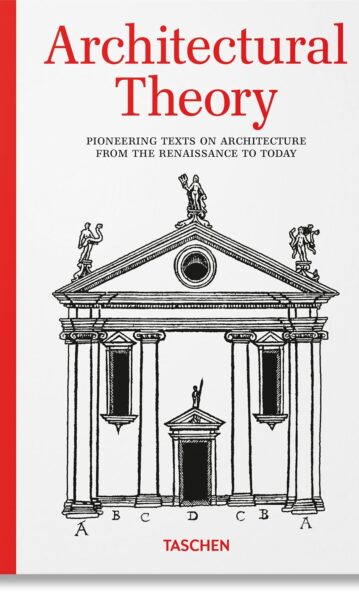
Architectural Theory
155,00 ₾If you’ve ever wondered what goes through architects’ minds when they design buildings, you’ll be happy to know that there’s no shortage of brilliant reading material to satisfy your curiosity. Wading through the archives at your local library may prove fruitful to your endeavor, but it won’t give you the instant gratification that Architectural Theory will.This book brings together all of the most important and influential essays about architecture written since the Renaissance, copiously illustrated and neatly organized chronologically by country. From Alberti and Palladio to Le Corbusier and Koolhaas, the best treatises by architecture’s greatest masters are gathered here, each accompanied by an essay discussing its historical context and significance. This is the all-in-one, must-have book for anyone interested in what architects have to say about their craft.The comprehensive overview that will help transform even the most uninformed novices into well-informed connoisseurs!
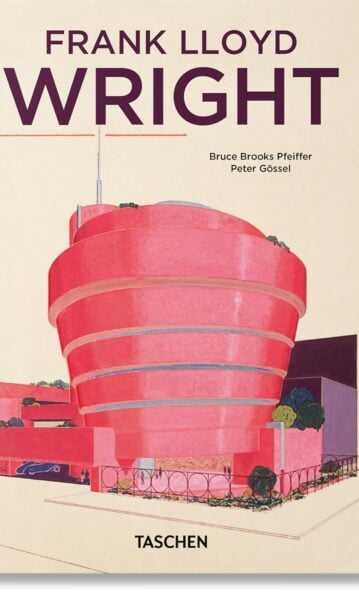
Frank Lloyd Wright
110,00 ₾A building by Frank Lloyd Wright (1867–1959) is at once unmistakably individual and evocative of an entire era. Notable for their exceptional harmony with their environment, as well as for their use of steel and glass to revolutionize the interface of indoor and outdoor, Wright’s designs helped announce the age of modernity, as much as they secured his place in the annals of architectural genius.
This meticulous compilation from TASCHEN’s previous monograph assembles the most important works from Wright’s extensive, paradigm-shifting oeuvre into one authoritative overview of America’s most famous architect. Based on unlimited access to the Frank Lloyd Wright Foundation’s archives at Taliesin West in Arizona, the collection spans the length and breadth of Wright’s projects, both realized and unrealized, from his early prairie houses, the Usonian concept homes, and the extraordinary Fallingwater to the Tokyo years, his designs for administrative buildings and places of worship, and later high-profile projects like the Guggenheim Museum in New York, as well as his fantastic visions for a better tomorrow with “The Living City.”

Scandinavian Design
110,00 ₾What makes Scandinavia such a hotbed of design talent and innovation? Explore masterful forms and lyrical lines from across Norway, Sweden, Denmark, Iceland, and Finland in this stylish book. Bridging the gap between crafts and industrial production, organic forms and functionality, this must-have guide includes in-depth entries on 125 designers.

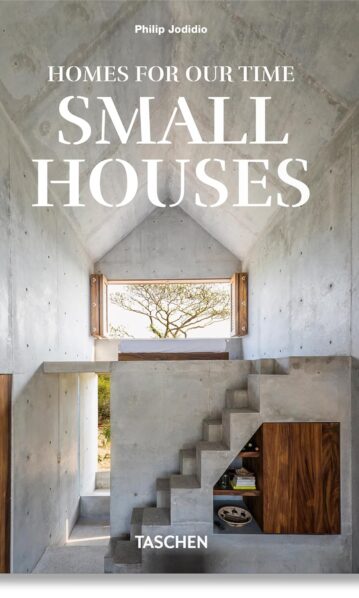
Small Architecture
80,00 ₾Big ideas for small buildings
Over the years, talented architects have occasionally indulged themselves with the challenge of designing small but perfectly formed buildings. Today, with reduced budgets, many architects have turned in a more focused way to creating works that may be diminutive in their dimensions, but are definitely big when it comes to trendsetting ideas. Whether in Japanese cities, where large sites are hard to come by, or at the frontier between art and architecture, small buildings present many advantages, and push their designers to do more with less.
A dollhouse for Calvin Klein in New York, a playhouse for children in Trondheim, vacation cabins, and housing for victims of natural disasters are all part of the new rush to develop the great small architecture of the moment. The 2013 Pritzker Prize winner Toyo Ito is here, but so are emergent architects from Portugal, Chile, England, and New Zealand. From world-famous names to the freshest new talent, come discover architectural invention on a whole new, small scale.

Le Corbusier
58,00 ₾The man with a modern mission
Born Charles-Édouard Jeanneret, Le Corbusier (1887–1965) is widely acclaimed as the most influential architect of the 20th century. From private villas to mass social housing projects, his radical ideas, designs, and writings presented a whole-scale reinvention not only of individual structures, but of entire concepts of modern living.
Le Corbusier’s work made distinct developments over the years, from early vernacular houses in Switzerland through dazzling white, purist villas to dynamic syntheses of art and architecture such as the chapel at Ronchamp and the civic buildings in Chandigarh, India. A hallmark throughout was his ability to combine functionalist aspirations with a strong sense of expressionism, as well as a broader and empathetic understanding of urban planning. He was a founding member of the Congrès international d’architecture moderne (CIAM), which championed “architecture as a social art.”
This book presents some of Le Corbusier’s landmark projects to introduce an architect, thinker, and modern pioneer who, even in his unrealized projects, offered discussion and inspiration for generations to come.

Piano
58,00 ₾The exploration and iconoclasm of an Italian master
While some architects have a signature style, Renzo Piano seeks to apply coherent ideas to extraordinarily different projects. His buildings impress as much for their individual impact as for their diversity of scale, material, and form.
Piano rose to international prominence with his codesign of the Pompidou Center in Paris, described by The New York Times as a building that “turned the architecture world upside down.” Since then, he has continued to craft many high-profile cultural spaces, including the Modern Wing of the Art Institute of Chicago; the Morgan Library Renovation and Expansion in New York; and, most recently, the Whitney Museum of American Art, an asymmetric nine-story structure in Manhattan’s Meatpacking District with both indoor and outdoor galleries. In New York and London, the Renzo touch has also transformed the skyline with the towers of the New York Times Building and the Shard, the tallest building in the European Union.
This essential introduction travels from Osaka, Japan, to Bern, Switzerland, and through many cities, structures, and islands in between, to explore the staggering scope of the Renzo Piano repertoire. From the “inside-out” Pompidou to the airy shells of the Tjibaou Cultural Center in Nouméa, New Caledonia, this is a thrilling journey through the beauty of architecture, where, in Piano’s own words, “each time, it is like life starting all over again.”
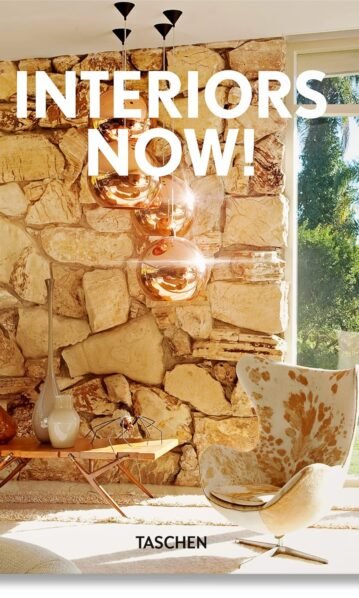
Interiors Now!
110,00 ₾A tour of contemporary home decor around the world
With an inspirational richness and diversity of styles, these homes, residences, hideaways, and studios will astound and astonish, no matter the taste; be it rustic country cottage, New York–style loft, or bohemian bungalow. This survey of contemporary interior design carefully curates homes from all over the world—from Auckland, New Zealand, to Avignon, France.
Mapped out through hundreds of images by renowned interior photographers, these gorgeous houses offer inspiration and ideas for your next renovation. Many of the selected homes are owned by creatives—designers, filmmakers, and collectors—whose eye for the perfect synthesis of interior elements is impressive, to say the least. Bringing together wallpaper, furniture, textiles, and objet d’art while cautiously balancing color, texture, and form, the creators of these dynamic spaces practice an art form of their own.
Eclectic or minimal, antique or extra-modern, this variety of decor locates contemporary style in all its manifestations, showcasing the endless possibilities and home-making magic of interior design.


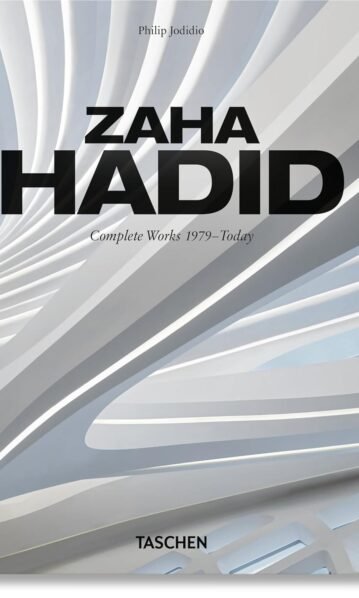
Zaha Hadid. Complete
110,00 ₾Zaha Hadid (1950 – 2016) was a revolutionary architect. For years, she was widely acclaimed and won numerous prizes despite building practically nothing. Some even said her work was simply impossible to build. Yet, during the latter years of her life, Hadid’s daring visions became a reality, bringing a new and unique architectural language to cities and structures such as the Port House in Antwerp, the Al Janoub Stadium near Doha, Qatar, and the spectacular new airport terminal in Beijing.
By her untimely death in 2016, Hadid was firmly established among architecture’s finest elite, working on projects in Europe, China, the Middle East, and the United States. She was the first female architect to win both the Pritzker Prize for architecture and the prestigious RIBA Royal Gold Medal, with her long-time Partner Patrik Schumacher now the leader of Zaha Hadid Architects and in charge of many new projects.
Based on the massive TASCHEN monograph, this book is now available in an accessible edition covering Hadid’s complete works, including ongoing projects. With abundant photographs, in-depth sketches, and Hadid’s own drawings, the volume traces the evolution of her career, spanning not only her most pioneering buildings but also the furniture and interior designs that were integrated into her unique, and distinctly 21st-century, universe.
“A celebration of all that is brave and audacious in her work.”
— Australian Financial Review
Post-Modern Buildings in Britain
60,00 ₾Post-modernism was the 1980s’ counter to Brutalism but fell out of fashion until its best buildings began to disappear. Now is the time to reassess its values. Historians Geraint Franklin and Elain Harwood discuss its background and key architects before celebrating Britain’s finest examples. Individual entries are beautifully illustrated, many with new photography, including the SIS Building made famous by James Bond, John Outram’s awe-inspiring pumping station in London’s Docklands and Judge Institute in Cambridge, and the late works of James Stirling and Michael Wilford, including No.1 Poultry – an extraordinary corner of the City that in 2016 became England’s youngest listed building.

Natural Cozy Cottage
45,00 ₾Create a haven of coziness and calm that embraces you as you walk through the door with Chris Myers’ effortless styling ideas and tips.
Taking a room-by-room approach, Chris describes the essentials of creating coziness from the colors to use, the textiles to incorporate, the decorative accessories and lighting to include, and how to bring a sense of personality and uniqueness to your own space. Using natural, or pre-loved and re-purposed objects is an important element of this ethos. Wherever you live, in an urban apartment, town house, or country cottage, Chris will inspire you to bring comfort and happiness into your space whether by creating a welcoming wreath for the front door made from foraged items, kitchen curtains made from old vintage quilts, eco-friendly natural cleaning products, or lavender bags and scented candles…
Your home will become a sanctuary, a home for the soul surrounded by the things you love, a place you will long to return to at the end of the day and one that is kind to the planet too.
Fast Company Innovation by Design
76,00 ₾Fast Company, the world’s leading business media brand, offers a comprehensive and vibrant look at the way design has permeated all areas of life and work
Design has become a critical part of doing business in today’s economy. Some of the most innovative companies in tech—Apple, Airbnb, Google, Tesla, and many more—have made human-centered design a hallmark of their brands. From fashion to architecture to office plans, and from digital processes to artisanal craftsmanship, design is having a moment in business. Or maybe business is finally having its design moment.
Fast Company Innovation by Design highlights the people, companies, and trends that have steadily advanced design to the forefront of the business conversation. Drawing from Fast Company’s vast library of stories that chronicle innovation in technology, leadership, world-changing ideas, and creativity, this lively book is urgent reading for any anyone seeking to understand the ways that design is fundamentally changing and enhancing business and daily life. A focus on “green” and socially conscious design draws attention to creative solutions to the most pressing concerns we face today.