Niko Pirosmanasvili

450,00 

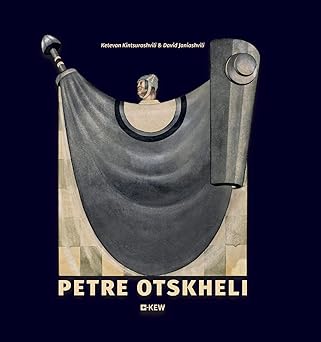
Niko Pirosmanashvili comprehensively tells the story of the life and work of elusive Georgian painter Niko Pirosmanashvili (c.1866-1918), popularly known as Pirosmani, during one of the most interesting epochs in the history of Georgia. Key essays, both recollections by those who knew him and contemporary scholarship, explore his life as an impoverished artist living in Tbilisi. Charting his influence on the Georgian and Russian avant-gardists to the Modernists, including Picasso, and the parallels he holds with Henri Rousseau and Vincent Van Gogh, the artist’s wider cultural impact is also examined from Georgian and international perspectives, past and present. Illustrations of his artwork, alongside a wealth of photographs from Georgia from the beginning of the twentieth century, make this a richly visual resource. With a foreword by Orhan Pamuk, this evocative book is the result of a meticulous process of assemblage by two artists dedicated to broadening Pirosmanashvili’s legacy and has been information for almost fifty years.

Scandinavian Design

110,00 

What makes Scandinavia such a hotbed of design talent and innovation? Explore masterful forms and lyrical lines from across Norway, Sweden, Denmark, Iceland, and Finland in this stylish book. Bridging the gap between crafts and industrial production, organic forms and functionality, this must-have guide includes in-depth entries on 125 designers.

The Ultimate Sneaker Book

110,00 

Sneaker Freaker has been at the forefront of the global sneaker scene for over two decades. With over 500 redesigned pages, fresh photography, immense historical detail, and otaku-level minutiae, this anthology combines the magazine’s finest and content created exclusively for this book into one big celebration of sneakers.

The Package Design Book (2)

80,00 

Package design is one of the most dynamic and fast-evolving fields of design today. Featuring over 600 creations from more than 35 countries, this compact edition celebrates extraordinary work from the global packaging design community. Showcasing the winners of the Pentawards from the past decade, the world’s leading packaging design competition.

Walt Disney’s Disneyland

58,00 

A visual history of the world’s magic megalopolis

Walt Disney dreamed for decades about opening the ultimate entertainment venue, but it wasn’t until the early 1950s that his handpicked team began to bring his vision to life. Together, artists, architects, and engineers transformed a dusty tract of orange groves about an hour south of Los Angeles into one of the world’s most beloved destinations.

Today, there are Disney resorts from Paris to Shanghai, but the original Disneyland in Anaheim, California, which has been visited by more than 800 million people to-date, remains one of America’s most popular attractions. From the day it opened on July 17, 1955, Disneyland brought history and fairy tales to life, the future into the present, and exciting cultures and galaxies unknown to our imaginations.

This intruiging visual history draws on Disney’s vast historical collections, private archives, and the golden age of photojournalism to provide unique access to the concept, development, launch, and enjoyment of this sun-drenched oasis of fun and fantasy. Disneyland documents Walt’s earliest inspirations and ideas, the park’s extraordinary feats of design and engineering, and each of its immersive “lands” from Main Street, U.S.A., to Tomorrowland. It is a treasure trove of original Disney documentation and expertise, with award-winning writer Chris Nichols drawing on his extensive knowledge of both Disneyland and Southern California history to reveal the fascinating tale of “the happiest place on Earth.”

Mucha

58,00 

Delicate illustration that defined an era

With his instantly recognizable decorative style, Czech artist and Art Nouveau master Alphonse Mucha (1860–1939) defined the look of the fin-de-siècle. In evocative shades of peach, gold, ochre, and olive, his seductive compositions of patterns, flowers, and beautiful women became paradigms of the Belle Époque years.

Mucha’s work permeated illustration, posters, postcards, and the advertising designs of his day. His striking posters of star actress Sarah Bernhardt were particularly famous. Alongside this delicate decorative work, Mucha also harbored strongly felt political ideas. With his monumental cycle The Slav Epic, he expressed his staunch support for Pan-Slavism, promoting the political independence of the Czech and Slavic nations from the Austro-Hungarian Empire.

Compiled in association with the Mucha Foundation, this book presents key works and introduces the full reach of Mucha’s œuvre from patterned decoration to his book illustrations, posters, photographs and monumental paintings.

Bosch

58,00 

Hieronymus Bosch’s meticulous visions of the grotesque, debauched, and divine

As cryptic as they are compelling, the masterpieces of Hieronymus Bosch (c. 1450–1516) remain some of the most enduring enigmas of the art world. Their intricate, allegorical, and often startling content has captivated not only art historians, but also fashion designers, rock stars, writers, and punk rockers, as well as countless modern and contemporary artist successors.

Although rooted in the Old Netherlandish tradition, Bosch developed a highly subjective, richly suggestive style to render both the celestial bliss of heaven and the grotesque tortures of hell, most famously and meticulously excecuted in The Garden of Earthly Delights. Here, as in his other known works, his artistic language combined religious humility with a razor-sharp wit, often playing off pictorial versions of contemporary proverbs or figures of speech.

This book ties together the elusive threads of Bosch’s oeuvre to provide a concise introduction to an at once haunting and enthralling pictorial world.

Turner

58,00 

Turner’s iridescent tableaux

In the work of Joseph Mallord William Turner (1775–1851) lies an impact akin to a sudden acquisition of sight. His landscapes and seascapes scorch the eye with such ravishing light and color, with such elemental force, it is as if the sun itself were gleaming out of the frame.

Appropriately known as “the painter of light,” Turner worked in print, watercolor, and oils to transform landscape from serene contemplative scenes to pictures pulsating with life. He anchored his work to the River Thames and to the sea, but in the historical context of the Industrial Revolution, also integrated boats, trains, and other markers of human activity, which juxtaposes the thrust of civilization against the forces of nature.

This book covers Turner’s illustrious, wide-ranging repertoire to introduce an artist who combined a traditional genre with a radical modernism.

Rubens

58,00 

Meet Sir Peter Paul Rubens, master painter and polymath

There are over 1,000 catalogued works by Sir Peter Paul Rubens (1577–1640), the 16th-century flag bearer for Baroque drama, movement, and sensuality. This essential introduction takes in the most important works from this astonishingly prolific oeuvre to explore Rubens’s influences and innovations, and his remarkable visual, and art historical, impact.

The richly illustrated survey takes in Rubens’s portraits, landscapes, and historical paintings, as well as his famed and bountiful nudes. Along the way, we examine the artist’s astonishing technique and his deft ability to depict narrative in a compelling and legible visual form, whether an erotic mythological scene or a tender biblical story. This remarkable artistic bravura is placed in context both within Rubens’s long art historical legacy through Van Dyck, Velázquez, and beyond, and his other talents as a classical scholar, diplomat, and knight.

Schiele

58,00 

Radical and all-revealing figures

With his graphic style, figural distortion, and defiance of conventional standards of beauty, Egon Schiele (1890–1918) was a pioneer of Austrian Expressionism and one of the most startling portrait painters of the 20th century.

Mentored by Gustav Klimt, Schiele dabbled in a glittering Art Nouveau style before developing his own much more gritty and confrontational aesthetic of sharp lines, lurid shades, and mannered, elongated figures. His prolific portraits and self-portraits stunned the Viennese establishment with an unprecedented psychological and sexual intensity, favoring erotic, exposing, or unsettling poses in which he or his sitters cower on the floor, languish with legs akimbo, glower at the viewer, and thrust their genitalia into the foreground. His models are at times skeletal and sickly, at other times strong and sensual.

Many contemporaries found Schiele’s work to be not only ugly but morally objectionable; in 1912, the artist was briefly imprisoned for obscenity. Today, his oeuvre is celebrated for its revolutionary approach to the human figure and for its direct and particularly fervent, almost furious brand of draftsmanship. This book presents key Schiele works to introduce his short but urgent career and his profound contribution to the development of modern art, which reaches right through to such contemporary talents as Tracey Emin and Jenny Saville.

Hundertwasser

58,00 

Friedensreich Hundertwasser, hero of fluid forms and ecology

Vivid color, organic forms, and a loathing of straight lines were just a few stalwart characteristics in the unique practice of Friedensreich Hundertwasser (1928–2000). A non-conformist hero, the artist, architect, and activist left a blazing trail of imagination and ideas in buildings, paintings, manifestos, initiatives, and more.

Hundertwasser’s best-known work is considered by many to be the Hundertwasserhaus in Vienna, a structural synthesis of the vitality and uniqueness that determined the artist’s entire oeuvre. For Hundertwasser, rational, sterile, monotonous buildings caused human misery. He called for a boycott of the modernist paradigm championed by the likes of Adolf Loos, and campaigned instead for an architecture of creative freedom and ecological commitment. A fierce opponent of straight lines, which he called “godless and immoral,” Hundertwasser was fascinated by the spiral, drawing also on the Secessionist forms of Klimt and Schiele.

This richly illustrated book traces Hundertwasser’s style and vision not only for each building, but for society at large. From naked addresses at the end of the 1960s to worldwide architecture projects and alternative blueprints for society, author Pierre Restany explores Hundertwasser’s most high-profile and innovative ideas in a thrilling introduction to a pioneering 20th-century mind.

Dürer

58,00 

The art, theory, and woodcut print revolution of Albrecht Dürer

A polymath of the German Renaissance, Albrecht Dürer (1471–1528) was a prolific artist, theorist, and writer whose works explored everything from religion to art theory to philosophy. His vast body of work includes altarpieces, portraits, self-portraits, watercolors, and books, but is most celebrated for its astonishing collection of woodcut prints, which transformed printmaking from an artisan practice into a whole new art form.

Dürer’s woodcuts astonish in scale as much as detail. Through works such as Apocalypse and the Triumphal Arch for Emperor Maximilian I, he created dense, meticulous compositions that were much larger, much more finely cut, and far more complex than any earlier woodcut efforts. With an ambitious tonal and dynamic range, he introduced a new level of conceptual, emotional, and spiritual intensity. His two major woodcut series on Christ’s Passion, named The Large Passion and The Small Passion after their size, are particularly remarkable for their vivid human treatment of the Christian narrative. In his copper engraving, Melancholia I, meanwhile, Dürer created a startling vision of emotional ennui, often cited as a defining early image of a depressive or melancholic state.

Ever inquisitive, Dürer absorbed ideas not only from masters and fellow artists in Germany but also from Italy, while his own influence extended across Europe for generations to come. In this essential TASCHEN introduction, we explore this pioneering figure’s complex practice, his omnivorous intellect, and the key works which shaped his enduring legacy.

Caravaggio

58,00 

The Baroque genius who electrified art history

Michelangelo Merisi da Caravaggio (1571–1610) was always a name to be reckoned with. Notorious bad boy of the Italian Baroque, the artist was at once celebrated and controversial, violent in temper, precise in technique, a creative master, and a man on the run.

Though famed for his dramatic use of color, light, and shadow, it was above all Caravaggio’s boundary-breaking naturalism which scorched his name into the annals of art history. From the dirtied soles of feet to the sexualized languor of bare flesh, the artist allowed even sacred and biblical scenes to unfold with a startling, often visceral humanity. This vivid pictorial world was accompanied by an equally intense personal biography, scored by gambling, debts, drunken brawls, and even a murder charge.

This book brings together more than 50 of Caravaggio’s most famous and revolutionary works to explore how and why this artist is now considered the most important painter of the early Baroque period and one of the defining influences of art history, without whom Ribera, Vermeer, Rembrandt, Delacroix, Courbet, and Manet could never have painted the way they did.

Cubism

58,00 

Deconstructing perspective with Picasso and peers

Pioneered by Picasso and Braque, Cubism has been described as the first avant-garde art movement of the 20th century. With inspiration from African and Native American art and sculpture, its practitioners deconstructed European conventions of viewpoint, form, perspective to create flattened, fragmented, and revolutionary images.

Picasso’s celebrated painting Les Demoiselles d’Avignon is typically regarded as the original cubist work, with its radical fracturing of objects and figures into distinct areas, corresponding to multiple different viewpoints. Cubism thereafter developed two distinct trends: Analytical Cubism, which continued to interweave perspectival planes in muted blacks, greys and ochre, and later Synthetic Cubism, characterised by simpler shapes, brighter colors, and collage elements such as newspaper.

This book presents the prime protagonists of Cubism, with work from artists including Pablo Picasso, Georges Braque, Fernand Léger, Juan Gris, Albert Gleizes, and Robert Delaunay.

1920s Berlin

58,00 

The roaring twenties in Berlin

It was the decade of daring Expressionist canvases, of brilliant book design, of the Bauhaus total work of art, of pioneering psychology, of drag balls, cabaret, Metropolis, and Marlene Dietrich’s rising star in theater and silent film. Between the paroxysms of two world wars, Berlin in the 1920s was a carpe diem cultural heyday, replete with groundbreaking art, invention, and thought.

This book immerses readers in the freewheeling spirit of Berlin’s Weimar age. Through exemplary works in painting, sculpture, architecture, graphic design, photography, and film, we uncover the innovations, ideas, and precious dreams that characterized this unique cultural window. We take in the jazz bars and dance halls; the crowded kinos and flapper fashion; the advances in technology and transport; the radio towers and rumbling trams and trains; the soaring buildings; the cinematic masterworks; and the newly independent women who smoked cigarettes, wore their hair short, and earned their own money.

Featured works in this vivid cultural portrait include Hannah Höch’s The Journalists; Lotte Jacobi’s Hands on Typewriter; Otto Dix’s Portrait of the Journalist Sylvia von Harden; Peter Behrens’s project of theAlexanderplatz; and Josef von Sternberg’s The Blue Angel, starring Dietrich as cabaret performer Lola Lola. Along the way, we explore both the utopian yearnings and the more ominous economic and political realities which fueled the era’s escapist, idealistic, or reactionary masterworks. Behind the bright lights and glitter dresses, we see the inflation, factory labor, and fragile political consensus that lurked beneath this golden era and would eventually spell its savage end with the rise of National Socialism.

Rothko

58,00 

Tragedy, ecstasy, and doom

Resisting interpretation or classification, Mark Rothko (1903–1970) was a prominent advocate for the artist’s consummate freedom of expression. Although identified as a key protagonist of the Abstract Expressionist movement, first formed in New York City, Rothko rejected the label and insisted instead on “a consummated experience between picture and onlooker.”

Following a repertoire of figurative works, Rothko developed his now iconic canvases of bold color blocks in red, yellow, ochre, maroon, black, or green. With these shimmering, pulsating color masses, Rothko stressed that he had not removed the human figure but rather put symbols or shapes in its place. These intense color forms contained all the tragedy of the human condition. At the same time, Rothko explicitly empowered the viewer in the expressive potential of his work. He believed “A picture lives by companionship, expanding and quickening in the eyes of the sensitive observer.”

From his early development through to his most famous color fields, this book introduces the intellect and influence of Rothko’s dramatic, intimate, and revolutionary work.

Rivera

58,00 

A revolutionary spirit in modern art

Diego Rivera (1886–1957) is a loud presence on the art historical stage. With devout political principles and a turbulent romantic history, he was at once husband and paladin of Frida Kahlo, advocate and adversary of Stalin’s Soviet Union, and liberator and traitor of Leon Trotsky.

Vibrant, graphic, and often monumental, Rivera’s paintings carry the same live political and passionate charge as his personal biography. Fusing European influences such as Cubism with a socialist ideology and an exaltation of Mexico’s indigenous and popular heritage, he created a new iconography for art history and for his country. He became one of the most important figures in the Mexican mural movement and won international acclaim for his public wall paintings, in which he presented a utopian yet accessible vision of a post-revolutionary Mexico. In 1931, Rivera was the subject of MoMA’s second ever monographic exhibition.

This book explores the unique blend of influence and ideology which secure Rivera’s place as both a unique and a universal painter, bound to the particular turbulent experience of early 20th century Mexico, and yet preoccupied with subjects such as revolution and class inequity which continue to speak to us today.

Rembrandt

58,00 

The complete self-portraiture

Few devotees of the form can approach Rembrandt Harmenszoon van Rijn’s radical contributions to self-portraiture. Challenging the conventions enshrined by his predecessors, Rembrandt transformed the art into a fully realized medium capable of communicating emotional depth rather than favorably immortalizing one’s likeness in the finest trappings of luxury. With more than 80 works spanning paintings, etchings, and drawings, the Dutchman’s lifelong practice of self-portraiture functions as a means of concretizing that which is fleeting. Across four decades, one constant is particularly striking across media and styles—Rembrandt’s dedication to presenting himself from multiple perspectives, celebrating the multiplicity of the individual and championing the unfiltered portrayal of emotional expression.

Apart from the thematic concerns present within Rembrandt’s suite of self-portraits, the works themselves are rich with technical innovation and experimentation. There is an unmistakable humanity present across the entirety of this oeuvre, each expressive brushstroke and obfuscated feature amounting to an unflinchingly honest characterization of himself, in all his foibles, contrasting states of feeling, and stages of life.

This monograph renders all of Rembrandt’s self-portraits – from his first experimentations at age twenty-two to his final self-portrait painted a year before his death – and stands testament to a life committed to revolutionizing painterly practice both in content and form.

Paris 1920s

58,00 

A vivid cultural portrait of 1920s Paris

Paris is the City of Light in all its facets. In the 1920s La Ville des lumières gleams especially bright and becomes a magnet for creative people from around the world. This is the decade of Coco Chanel and Josephine Baker, Art Deco and Surrealism, café culture and cabaret. The most famous artists of the epoch, later called Classic Modernism, are in close contact and have lively exchanges with one another – including Marcel Duchamp, Francis Picabia, Pablo Picasso, René Clair, Sonia Delaunay, André Breton, Paul Éluard, Max Ernst and Salvador Dalí. The creative life and all its excesses flourish – bohème is the word for this way of living. Composers like Igor Stravinsky, writers like James Joyce or Ernest Hemingway and exiles from Eastern Europe like Constantin Brancuşi or Marc Chagall enrich the illustrious scene on Montparnasse. The pulsing bars and dance halls of Montmartre are captured by photographers André Kertesz and Brassaï. The French economy is booming and luxury department stores like La Samaritaine open their doors. Coco Chanel creates her own perfume and designs the little black dress.

More than 30 outstanding works of architecture, painting, sculpture, film, photography, design and fashion are presented, including Giacometti’s Surrealist Suspended Ball and the film Un chien andalou by Dalí and Buñuel. To this day, the burgeoning creativity, diversity and savoir vivre make Paris a place of longing for night owls, bons vivants and aficionados of the fine arts.

Motorcycles

110,00 

50 of the most legendary and coveted motorcycles of all time

Dream Rides: The most spectacular bikes on the planet. From the 1894 Hildebrand & Wolfmüller to the 2020 Aston Martin AMB 001, this book lavishly explores 50 of the most desirable motorcycles to have ever sped thrillingly around a circuit or along an open road. From pioneering record-breakers, luxury tourers, and legendary roadracers to GP-winning machines, iconic superbikes, and exotic customs, this book celebrates motorcycle design and engineering at its highest level. Many examples are from acclaimed private collections and very rarely seen. Others are the all-out stars of renowned motorcycle museums—such as the 1938 Brough Superior “Golden Dream” or the 1957 MV Agusta 500 4C, which took John Surtees to World Championship glory. Alongside some early survivors in astonishingly original condition is a stable of fabled racers—the actual machines that were competed on by the likes of Tarquinio Provini, Mike Hailwood, Giacomo Agostini, and Barry Sheene.

The fascinating stories behind these fabulous motorbikes are expertly recounted in detail, alongside stunning imagery specially taken for the book by the world’s leading motorcycle photographers. Also included are rare archival gems, from early posters to remarkable action shots.

A cornucopia of motorcycle treasures and an absolute must-have for all bike enthusiasts!

The History of Graphic Design

110,00 

Through the turbulent passage of time, graphic design—with its vivid, neat synthesis of image and idea—has distilled the spirit of each age. Surrounding us every minute of every day, from minimalist packaging to colorful adverts, smart environmental graphics to sleek interfaces: graphic design is as much about transmitting information as it is about reflecting society’s cultural aspirations and values.

With his sweeping knowledge of the field, author Jens Müller curates the standout designs for each year, a running sequence of design milestones. This collection of important graphic works represents a long-overdue reflection on the development of a creative field constantly changing and challenging itself. These key pieces act as coordinates through contemporary history, helping us trace the sheer influence of graphic design on our daily lives.